The One Crucial Ingredient to Fitness.
My latest piece is going to violate my two iron-clad rules: I try to avoid articles with a numeric "click-bait" title (e.g. "the five exercises guaranteed to give you shredded abs") and never promote some cure-all elixir. There is no one exercise, or regimen or influencer that can magically transform years of sedentary behavior into being someone that's totally fit.
Fitness is hard and incremental. It takes time and dedication. There are no quick fixes. But there is one thing that can you can do to make your goals much more attainable — you can prioritize functional goals over aesthetic ones.
Now, before I'm accused of hypocrisy, I'm firmly tethered to reality. I like looking good. No one has ever stared at me in slack-jawed disbelief when I tell them I'm a personal trainer, and I consider that a win. But I prioritize functional goals when I "exercise" (more on that word in a bit), knowing that the aesthetics will follow.
Take cycling, for example. Cycling is my zen. It's my way of recalibrating my mental state and elevating my mood. Cycling allows me to be a tourist in my own neighborhood and see the world through a different prism. Does cycling produce aesthetic benefits? Sure. It gives me strong leg muscles and burns fat. But those aren't the primary goals.
Why? Because they can't be measured.
Aesthetic goals are nebulous and fluctuating. They're not tied to anything concrete and therefore are rarely achievable. What do buns of steel actually look like? Would a lesser alloy like buns of magnesium or copper suffice? How do you quantify shredded abs? Is it a "six-pack?" What if you achieve a three-pack after years of training? Should you call it quits?
And then there's weight oriented goals. This is the most loaded topic of all. For people who are morbidly obese, it's obviously imperative that they lose fat. Being obese is a serious health risk. But for the majority of people that begin a regimen to lose "xxx" pounds, it's often a losing proposition. First of all, weight (fat) loss is primarily accomplished in the kitchen. Secondly, the typical human body fluctuates around five pounds a day. I've seen many people tie their fitness and well being into a fixed weight goal and it rarely (if ever) works. Lastly, losing weight (in and of itself) has nothing to do with fitness. I've known quite a few "skinny" people who struggle to walk up a hill.
Sadly, this still primary affects women, although the phenomenon of "lookmaxxing" is now impacting young men.
I know advice is counterintuitive and perhaps detrimental to my career as a personal trainer. But, after two decades in the fitness industry and a stable of clients that I've been training for almost as long, I'm in the "Rhett Butler" stage of my career.
"Frankly, my dear, I don't give a damn."
I've seen enough evidence in two decades as a trainer to know my premise is true. But that also begs the next question: absent aesthetic goals, how do you become fit?
The most important thing is to set concrete, incremental, and achievable fitness goals. Saying "I want to get really ripped," or "super skinny," isn't an achievable fitness goal. Instead, focus on doing five push-ups. Or ten. Or twenty. Or running a mile. And then two. Or signing up for that Pilates or yoga class. Or bench pressing 150 pounds.
Whatever the goal is, make sure that it's realistic and attainable, and build on it from there.
Be accountable to someone. There is plenty of evidence that going a group workout program, or working out with a friend, increases your chances of success. Friends encourage and assist you along the path toward fitness and can chide you when you fail to show up. If that's not motivation enough, consider hiring a personal trainer. Very few people are apt to skip a workout when there's money on the line.
Change your terminology. If you really delve into it, "exercise" is a weird word. It implies something that's distinct from us — and therefore unnatural. We're a species that's hard-wired for moving. When we stopped doing that, we had to find a substitute, so we invented "exercise."
The problem is that, for most people, the word has a negative connotation. It implies drudgery and has a preposition that becomes an impediment. Think about that for a minute. We say "we're going to the cinema or going out to dinner," because those are things that necessarily involve some traveling.
When we say "I'm going to go exercise," it already implies some distance between yourself and the activity. That gulf can be an impediment on its own. Use another term. "Cycling." "Lifting weights." "Doing tai-chi or my floor routine." Anything but the dreaded "e" word.
Once again, I realize that advising people to focus on functional gains rather than aesthetic goals can be a hard sell. It's the equivalent of a chocolatier extolling the benefits of broccoli to his customers. But if you're having a hard time accomplishing your fitness goals, this is the best change you can make to your regimen.
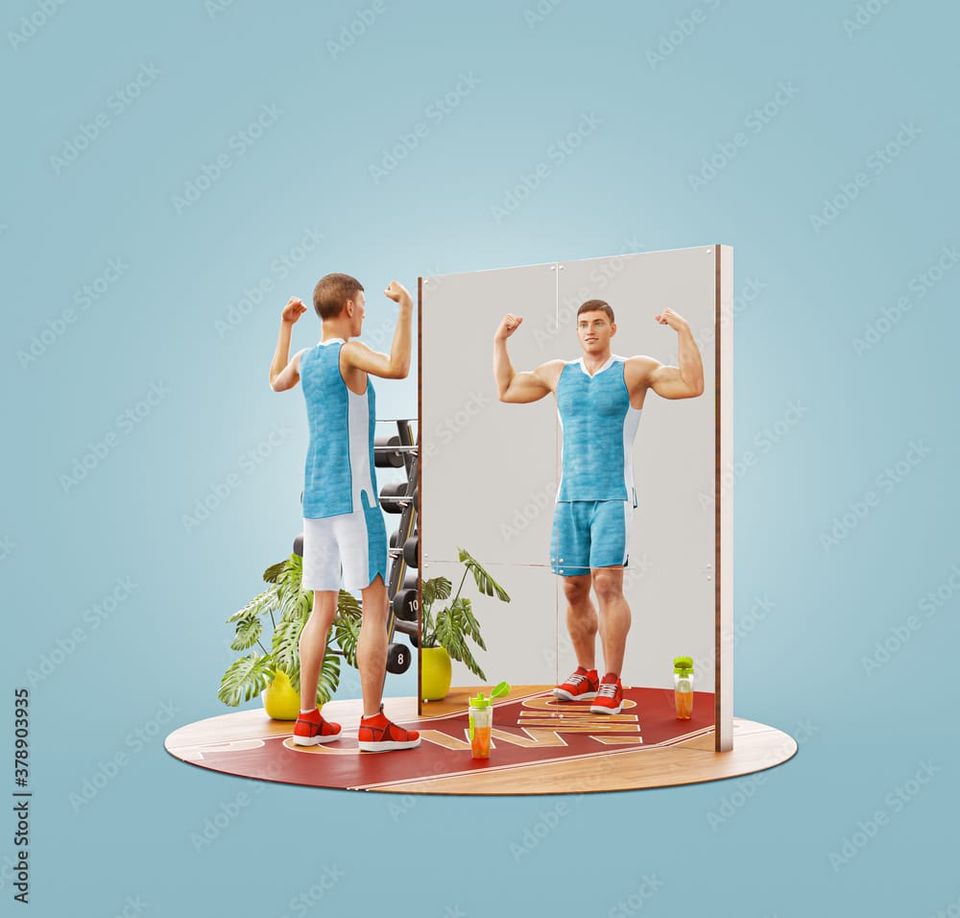
As a side benefit, that person you aspire to see in the mirror might become more of a reality.
Joshua Brandt is an Oakland based personal trainer. He can be reached at joshua@joshuabrandtpt.com or (415) 412-7339.
If you enjoyed reading this article, please pass it along!
Member discussion