The Smashing Pumpkins and Subjective Age Bias.
Every once in a while, something happens that crystallizes the passage of time. For me, those moments are usually rooted in pop culture.
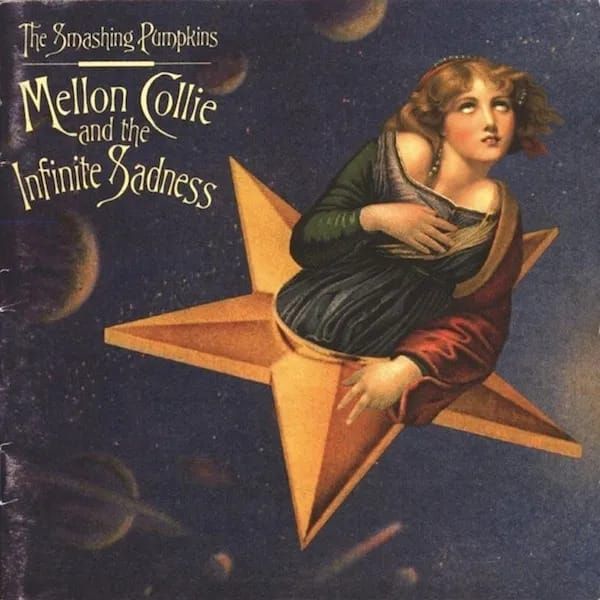
Recently, The Smashing Pumpkins turned their monster album "Melon Collie and the Infinite Sadness" (often referred to as the "Wall" for Generation X) into an opera to celebrate the album's 30th anniversary.
Thirty years? How is that even possible? That was the soundtrack to my youth. Hearing about that evoked infinite wistfulness.
But that disconnect paled in comparison to a recent photo shoot I sat for with my friend Phil.
Phil had generously offered to take some head shots for my blog and had suggested some dates. I delayed the photo shoot several times. Some of it was due to scheduling conflicts, but some of it was for reasons I couldn't quite articulate. There was something about the process that made me apprehensive.
A big part of it was that I'm not acclimated to seeing pictures of myself — particularly head shots. I don't post on social media, so I don't see continual visual references. (My twin eleven year-old daughters, conversely, are very familiar with "selfies.") The last portrait I actually sat for was about 25 years ago, when a friend snapped some pictures for a dating site.
Even if the photographer is a close friend (as Phil is) the experience of being photographed is emotionally taxing. The prism through which you're being seen is inhuman, even if the person wielding it isn't. Phil assured me throughout the process that he was getting some great shots that captured the "essence" of who I was. (Assumedly, the occasional bouts of selfishness and immaturity would be cropped out.)
When he sent back the photos a few days later, I had a visceral reaction.
"There's something wrong with your camera."
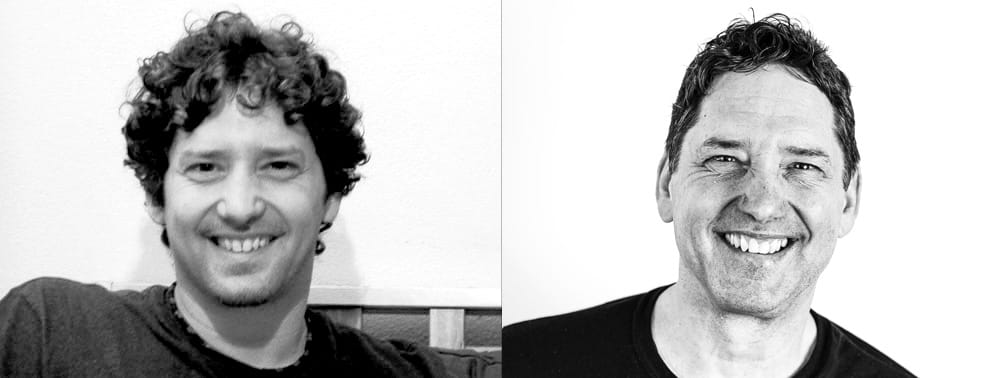
In my mind, I'm the same age I was when I sat for the dating app — about 35 years old. In the pictures Phil sent me, I was looking squarely at a man in late middle-age. Or rather, he was looking at me. It was totally discombobulating. That photo shoot might've been the exact moment that it finally dawned on me: as of next year I'll be sixty. Equidistant to 85 as I am to 35. And yet, for years I've pretended otherwise.
There's a certainly a good amount of vanity and self-delusion in this reaction. And, since I'm in a very youth-oriented profession, perhaps an emotional buffer zone as well. But, the reality is that I'm not an outlier. There's even a name for my cognitive dissonance: "subjective age bias."
Many people over the age of 40 report feeling twenty percent younger than they actually are, according to one study. The reasons for this discrepancy are manifold. Feeling younger can yield positive health benefits and a greater sense of self-esteem, which, in turn, can actually positively impact longevity.
Taken too far, of course, the chasm between perceived age and actual age can precipitate a mid-life crisis. The reality is that even as my mind was telling me I was thirty five, my body was insisting it's almost 60. Put a little differently, getting out of bed in the morning at my age is Mother Nature's way of saying "Wait...you're still here?"
The way I exercise also reflects the reality of who I am now, rather than who I was in my twenties and thirties. There are certain non-negotiable elements to my regimen that reflect the exigencies of aging. Here are the changes I've made to my workouts to reflect the fact that I'm no longer in the prime of my youth.
#1 I do functional workouts, not procreative workouts.
Once upon a time, I was a really skinny adolescent who yearned for the attention of the opposite sex. I have a tremendous amount of empathy for that kid (and all kids going through a similarly painful adolescence) but the workouts he did should be relegated to the past. For example, the "biceps curl" is one of the least productive and efficient exercises someone can do. There's a reason it's derided as "curls for the girls." (Or boys.) It just has no practical application beyond getting your biceps "swole." I call these exercises "procreative workouts," because they're designed to attract mates. Often times, however; they have limited application in the real world.
Focus instead on compound movements that target multiple muscle groups, such as push-ups, squats, or dead lifts.
#2 There are no machines at the gym that target the areas I'm concerned about.
Walk into any gym today and ask to meet with a fitness professional. Tell them you really want to target two specific areas — your hands and your feet. Prepare for a blank, quizzical stare.
In a sense, this is understandable. We're programmed to appreciate certain anatomical parts that are visible and sought after. Shredded abs. Bulging biceps. Gloriously rounded glutes. But there are other anatomical parts equally — if not more — important. The hands and feet are two of them.
Grip strength has been correlated with longevity, as I've written about previously. One reason is that if you fall, you need to hoist yourself back up again. Good grip strength is obviously crucial for this. And, although its seems totally obvious, your feet are the shock absorbers for the body. Ask anyone with flat feet about this. This goes double for people with bad knees. I do exercises to strengthen my feet almost every day.
#3 I don't ignore my posterior chain.
We all want a beautiful butt. That's a given. But how many of us want a strong butt? Furthermore, how many of us understand the importance of having strong glutes? And strong, flexible hamstrings? The answer is simple — everything is interconnected. And your glutes and hamstrings are neighbors with a very important muscle group you don't want to piss off or injure: your back. The stronger your glutes, hamstrings, and ab muscles are, the stronger your back will be. And the more flexible your hamstrings are, the less apt you are to throw out your back out doing mundane things. I do "bridges" and "supermans" as a regular part of my routine.
#4 I don't skip the stretching.
See above. I usually stretch for twenty to thirty minutes every day.
#5 If something qualifies as "epic," I'm probably going to skip it.
Just this morning, a friend of mine sent me a text about the "Bay Area 100 Ultramarathon." It's a new event that's a 100 mile race through several East Bay Area parks. Sounds fun. Wait...no it doesn't. It actually sounds crazy. Even if my knees were capable of doing that why would I want to subject myself to such misery?
That's not to say that I avoid doing difficult things. If I can get up early enough on an upcoming trip (admittedly a big if), I plan on doing the ride around Lake Tahoe, often dubbed "The Most Beautiful Ride in America." (Haven ridden around Crater Lake, I'd say there's competition for that moniker.) That's a 75 miler. It's certainly doable. But rides like that are the exception, rather than the rule.
My motto, especially as I age, is to do to less intense and time consuming exercises more frequently.
#6 If something's gotta give in the routine, it won't be strength training.
See above. We have limited time in the day. Given the choice on days between less (or no) cardio and strength training, I'm going to choose the latter. I'm not saying that cardio isn't important. It is, for a myriad of reasons. I'm a cyclist. It's my zen. But as long as I can walk up a hill, it doesn't matter in the slightest how fast I can get up it. That's a performance metric, not a functional one.
Strength training, on the other hand, is imperative to mitigate muscle and bone density loss. It's non-negotiable. I don't skip it, and neither should you.
#7 I prioritize sleep.
Or at least I try to. I'm not the best sleeper. I'm actually jealous of people who can fall asleep on a dime. I take sleep aids. I also keep the bedroom dark, as cool as I can, and avoid excessive screen time at night. I treat sleep as a job.
I'm actually a bit of a prima donna about it. I know many people think it's "boring" to set your schedule around a circadian rhythm. I'm happy to be boring. Give me a good night sleep and a strong cup of coffee in the morning, and I'm a happy man. And a healthy one. Sleep is intimately related to health and longevity, and it should be prioritized.
#8 My friendships matter.
Many of us have heard about the "loneliness crisis." Perhaps it comes across as a media creation, or a bit of hyperbole. It isn't. It's real. And it impacts middle-aged men more than any other group. I can personally testify to that.
I have a network of good friendships. But friendships need to be nurtured, or they wither away. Not only is that a sad state of affairs, but the science is very, very strong on this fact: loneliness leads to a shorter life expectancy.
One of the best things you can do for your health is also one of the easiest: call a good friend and have an extended conversation. Or, better yet, go meet them in person.
My friend Craig (Phil's brother) had a great quote: "We revere antiquity in our things, but revile it in our faces."
It's an artful statement that masks a bitter conundrum. An entire industry has been built around reconciling that difference. And it begs the question: is there a compromise between "raging against the dying of the light," and senescence?
My aging body has been planted on terra firma for quite some time now. It creaks. It sags. It sighs. My mind, however, has been intent on tripping down Memory Lane. It paid no heed to what was occurring on its Southern borders.
Phil's camera brought all that tension into focus.
There are lines on my face. Less hair on my head. Extra folds of flesh beneath my chin. I'm no longer at the tail end of my youth, but at the beginning of being elderly. Instead of maximizing my physical gifts, I'm carefully managing their decline.
And yet, if given the chance to forsake the middle-aged man in the photo, would I opt to be the younger man in the corresponding photo? Not a chance. I'm happier, more fulfilled, and have a much greater sense of what's truly important in life. Above all, I'm a father.
I called Phil not long after he had taken the photos and explained the gamut of emotions that I had experienced.
He took it all in and gave a thoughtful pause before answering.
"Well," he said. "All of that stuff comes free of charge."
Joshua Brandt is an Oakland based personal trainer. He can be reached at joshua@joshuabrandtpt.com or (415) 412-7339.
If you enjoyed reading this article, please pass it along!
Sources:
1) Markus Wettstein et al. (04/18/2023) "Younger Than Ever? Subjective Age Is Becoming Younger and Remains More Stable in Middle-Age and Older Adults Today." Sage Journals
2) David C. Rubin and Dorthe Berntsen (10/13/2006) "People Over Forty Feel 20% Younger Than Their Age: Subjective Age Across the Lifespan." PubMed
3) Alisa Bowman (01/19/2024) "Sleep and Longevity: How Quality Sleep Impacts Your Life Span." Mayo Clinic Press
4) The U.S. Surgeon General’s Advisory on the Healing Effects of Social Connection and Community (2023) "Our Epidemic of Loneliness and Isolation."
5) Xuexin Yu et. al (12/11/2023) "Association of Cumulative Loneliness with All-Cause Mortality Among Middle-Aged and Older Adults in the United States, 1996 to 2019." Proceedings of the National Academy of Sciences (PNAS)
Member discussion