On Proust and Push-Ups.
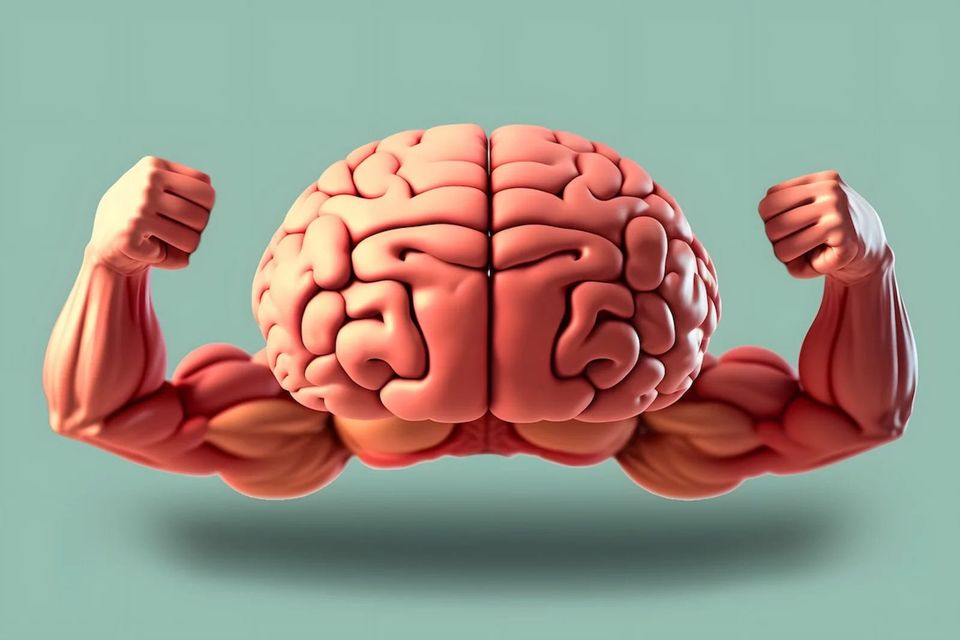
At first glance, reading the seminal novel "Remembrance of Things Past" and push-ups have very little in common. One endeavor utilizes brain cells and the other utilizes pec muscles. Furthermore, the author (Marcel Proust) was no paragon of fitness. He suffered from a variety of maladies, including asthma, insomnia, severe anxiety and depression, and was an habitual user of barbiturates and opium. In short, Proust was a physical mess. Perhaps the veritable antithesis of fitness.
But dig deeper.
Perhaps no section of "Remembrance of Things past," has been so scrutinized, lionized, and dissected as the "Madeleine" excerpt:
"No sooner had the warm liquid, and the crumbs with it, touched my palate, a shudder ran through my whole body, and I stopped, intent upon the extraordinary changes that were taking place. An exquisite pleasure had invaded my senses, but individual, detached, with no suggestion of its origin. And at once the vicissitudes of life had become indifferent to me, its disasters innocuous, its brevity illusory--this new sensation having had on me the effect which love has of filling me with a precious essence; or rather this essence was not in me, it was myself. I had ceased now to feel mediocre, accidental, mortal. Whence could it have come to me, this all-powerful joy? I was conscious that it was connected with the taste of tea and cake, but that it infinitely transcended those savours, could not, indeed, be of the same nature as theirs. Whence did it come? What did it signify? How could I seize upon and define it?"
That passage has been so historically consequential that it spawned the term “involuntary reminiscence," which lead to an entire field of scientific inquiry.
But what does this have to do with push-ups, you say?
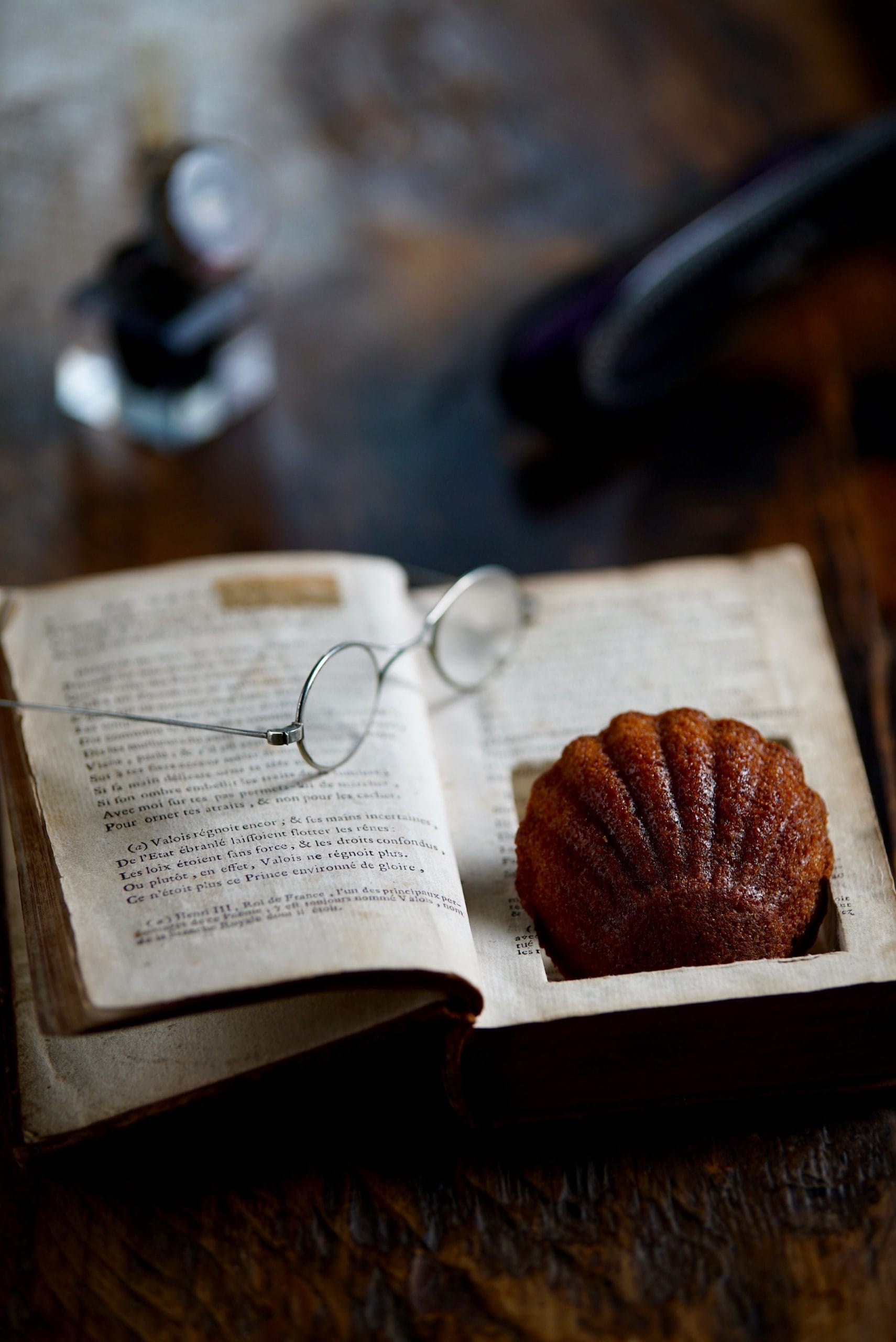
In 2026, the immediate reaction to the "Madeleine" excerpt would probably be "TL/DR." We're talking about a guy drinking a cup of tea, right?
And yet that passage — similar to so many other great works of literature — contains so much more beneath the surface. The words are evocative and contemplative. They invite you to slow down and savor the seemingly mundane aspects of life that can evince powerful memories decades later.
Reading is exercise for your brain. It's slow, and incremental. The benefits can often accrue gradually. Reading, above all else, is an investment in time.
And so it is with fitness.
Perhaps "Remembrance of Things Past" was foisted on you in high school. Or perhaps it was "Catch-22," "Native Son," or numerous other famous novels. Perhaps you could see no applicability to your own life in the novels, or no benefit to reading them. Similarly, perhaps you had a sadistic high school phys ed teacher who insisted that you do crunches, push-ups, and endless laps around the gym. Perhaps they were out of shape themselves.
"What is the point of all this drudgery?" your fifteen year-old self might've thought. That's a perfectly understandable reaction to have as a fifteen year-old. But the equation changes when you're 40. For everyone. That's when you realize the benefit of all the work you've done over the past few decades — or are forced to confront the looming disaster of your health.
The good news is that fitness — similar to reading and writing — is a skill that can be honed over time. Was Proust imbued with some magic pixie dust that might him an extraordinary writer? We'll never know. But what we do know is that the sickly author labored in solitude for over a decade to write his Magnum Opus. He essentially locked himself in his room and made the work his sole purpose.
Similarly, when I first decided to become a personal trainer, I bought this book and embarked on a serious fitness journey. Prior to that, I stayed in shape. Or, at least I thought I did, because the mirror gave me good feedback.
But the mirror lied. My superficial muscles (abs, arms, etc) were great, but my core strength was terrible. And so I worked on it every day for at least two hours. Planks. Push-ups. Squats. In the span of six months, I remade my fitness.
I possessed no innate superpowers. The one quality I had that I shared with Proust was the ability to focus. To pay attention. That just happens to be the one quality that's sorely lacking in our society today. And the blame lies squarely with social media.
To put things in a different perspective, I have an acquaintance who approached me about getting in shape a few years ago. He said that one of the major obstacles he had was time constraints. And yet this person spent more than two hours every night doomscrolling on social media. Doomscrolling is junk food for your mind. Not only is trolling your former next door neighbor's cousin on social media a colossal waste of time, but it hampers your ability to focus — and to achieve things that require focus.
Jonathan Haidt, one of the most fervent advocates for reclaiming attention (and the author of the bestselling "The Anxious Generation") recently gave a commencement speech to the graduating class of NYU. In his speech, he called upon graduates to seize control of their senses again, and wrest power away from the forces that seek to monetize and monopolize our brains.
"It sounds simple, but paying attention is in fact one of the most challenging and meaningful things you can do. Because what you pay attention to shapes what you care about, and what you care about shapes what you become. Taking control of your own attention has never been easy, which is why it’s one of the many things this university has tried to prepare you to do."
Haidt is offering salient advice. Get off social media. Or cut way back. Utilize your valuable and limited attention span for things that matter. Use that time to savor a book. It certainly doesn't have to be Proust. Or Faulkner. Or Hemingway.*
Or work on your fitness. Get yourself to a point where fitness becomes something instinctual. Your body will be able to evoke visceral muscle memories in the same way Proust savored a Madeleine.
Start a new chapter in your life called "Remembrances of Push-Ups Past." **
Joshua Brandt is an Oakland based personal trainer. He can be reached at joshua@joshuabrandtpt.com or (415) 412-7339.
If you enjoyed reading this article, please pass it along!
Sources:
1) Pascale Gisquet-Verrier and David C. Riccio (02/12/2024) "Proust and Involuntary Retrieval" Frontiers in Psychology
*Perhaps no book is as dense as "Infinite Jest." The footnotes alone are longer than most novels. My client Craig (also a writer) suggested that anyone who actually read the book should win a big, brass belt buckle — just as ostentations as the prominence of the novel on most bookshelves.
**I couldn't help it. Apologies.
Member discussion