Ankle Mobility: The Thing You Didn't Know You Needed.
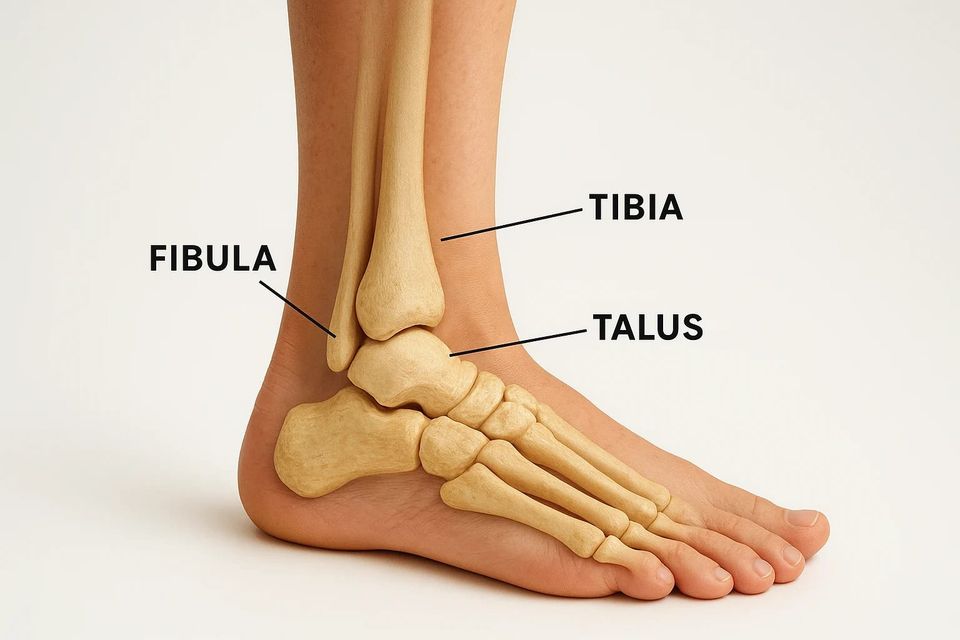
Trivia question: what is the most common injury involving a ligament? Hint: it's not the anterior cruciate ligament (ACL.) The answer is something you most likely haven't heard of — the anterior talofibular ligament. This injury is more colloquially known as an ankle sprain.
The ankle complex is a not something you want to sprain, fracture, twist, or shatter. It's extraordinarily complex, consisting of three major bones, the tibia, the fibula, and the talus (as in the picture above.) It's also comprised of numerous ligaments (the connective tissue that holds bones together) and tendons (the structures that connect muscles to bones.) It holds another lesser known distinction: ankle mobility correlates directly with longevity.
Ankle mobility is a necessary ingredient in everything from sports to mundane household activities. Lack of mobility can impact your knees and hips, and more crucially, is a big factor in falling. Falling, of course, is the biggest source of injuries for those 65 and over, according to the CDC.
A recent study from a few months ago highlighted an interesting dilemma. The study tracked 107 adults between the ages of 26 and 86 as they walked normally, focusing on the full cycle of ankle dorsiflexion (the movement at the ankle joint where the foot is lifted upwards) and plantar flexion (the movement at the ankle joint that results in the toes pointing downward). The study demonstrated that older adults simultaneously contract the tibialis anterior (shin muscle) and gastrocnemius (calf muscle) during the early and middle parts of steps — a process the study authors labelled "co-contraction" — while reducing the momentum during the final push-off.
In simpler terms, even as Mother Nature protects elderly people by promoting stability, aging also causes a proportional loss in the ability to generate force. The end result is that adults with impaired ankle mobility are essentially glued to the ground. They're stable enough to support themselves, but any step forward carries a high risk of a stumble or fall.
Here are some steps elderly people (and non-elderly) people can take to promote ankle mobility.
#1 Seated ankle circles.
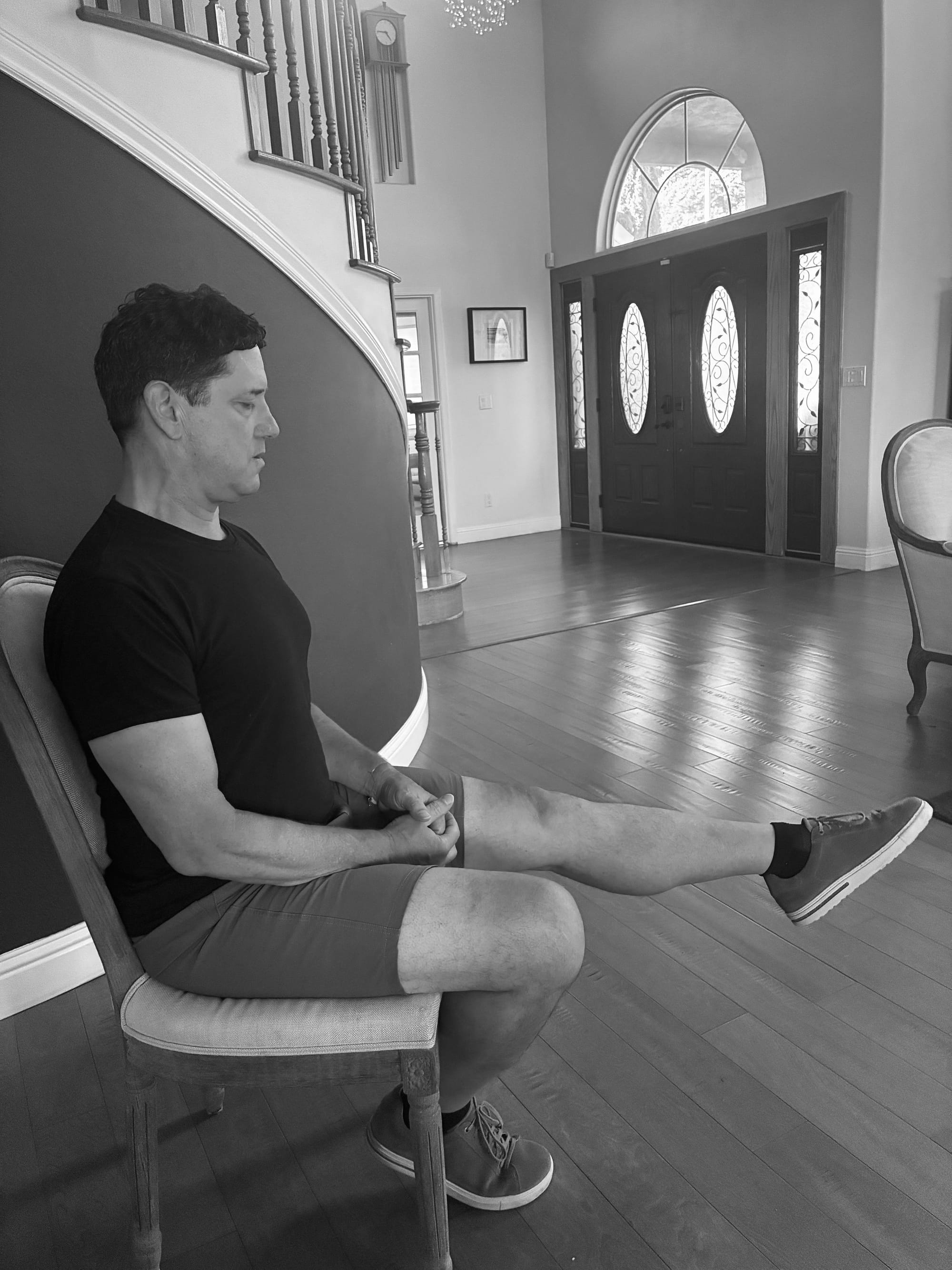
Sit on a chair with your back straight. (Always with your back straight!) Lift one foot off the ground and slowly rotate your ankle clockwise for five repetitions, then counter-clockwise for another five. Repeat with the other foot. Increase in increments of five. This is a great beginner/impaired mobility exercise for range of motion.
#2 Calf raises.
Use a raised platform or perform the exercise on the ground. A raised platform provides a fuller range of motion, especially on the eccentric (lowering) motion. Stand with feet shoulder width apart. Rise onto your toes, hold for a moment, and then, very slowly, lower your heels back to the ground. The main benefit occurs in the eccentric (muscle lengthening) motion. Repeat 10 times, and add five incremental reps. This exercise strengthens the calf muscles while improving ankle stability.
#3 One-legged balance.
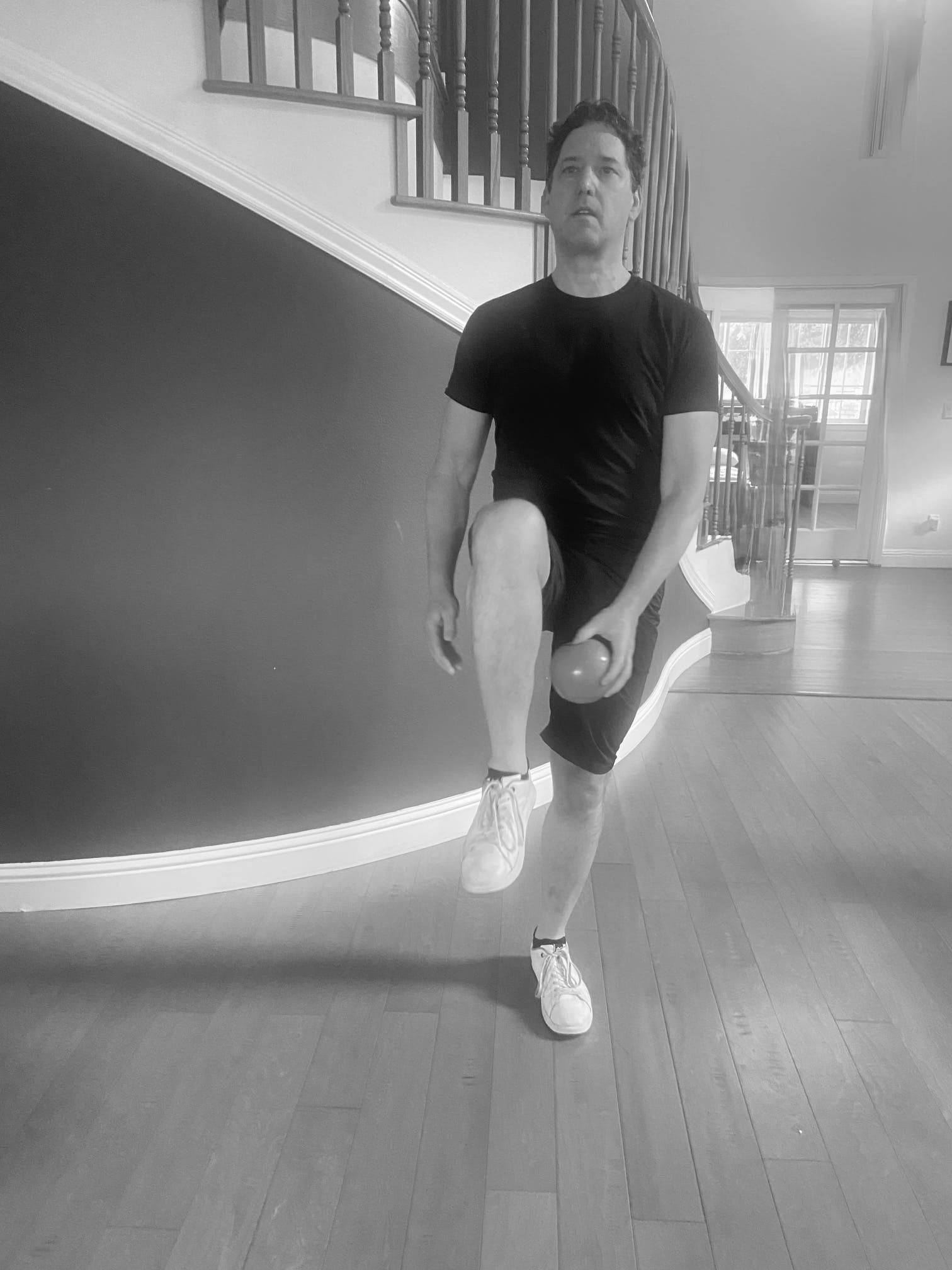
Stand on one foot, and lift your knee up until it's level with your waist. Tighten your abs and glutes (these are the primary muscles used for stabilization.) Hold for thirty seconds, and gradually increase the time by thirty second increments. This exercise strengthens your ankle complex, deep feet muscles, and, most significantly, improves balance.
More advanced. And more fun! Thread a ball through your raised knee, as above. Try for a set of 20 at first and increase in increments of 10. I do a set of 50 on each side with clients.
#4 Wall calf stretch.
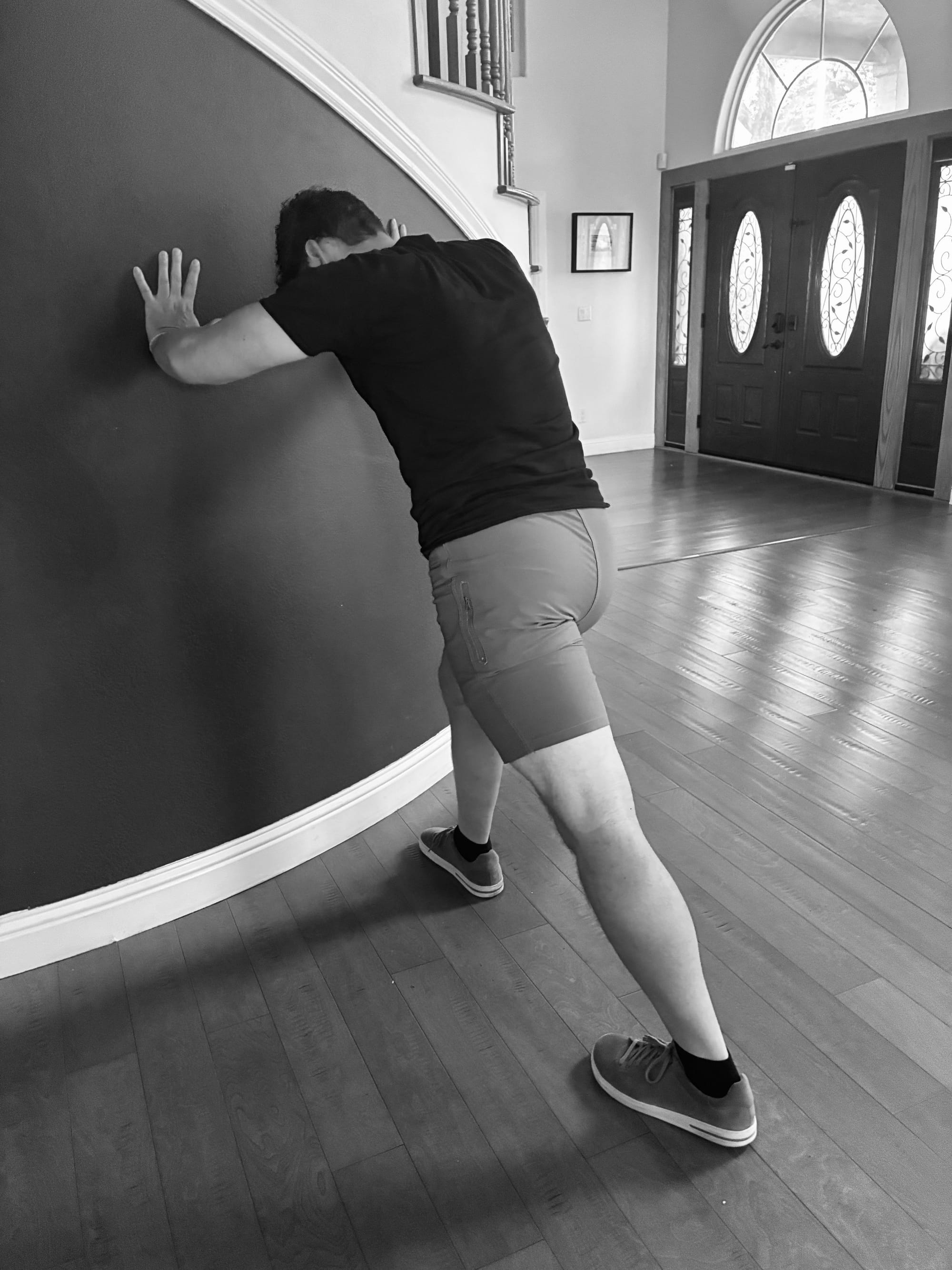
One of the biggest culprits with stiff ankles is having tight calves. The calf muscles (the larger gastrocnemius and the deeper and smaller soles) pull on the ankle complex when tightened. Tight calf muscles can be caused by numerous factors but the primary ones are sitting and elevated footwear.
A study in Biomechanics and Modeling in Mechanobiology found that habitually wearing high heels resulted in a shortening of the calf muscle by as much as 22 percent.
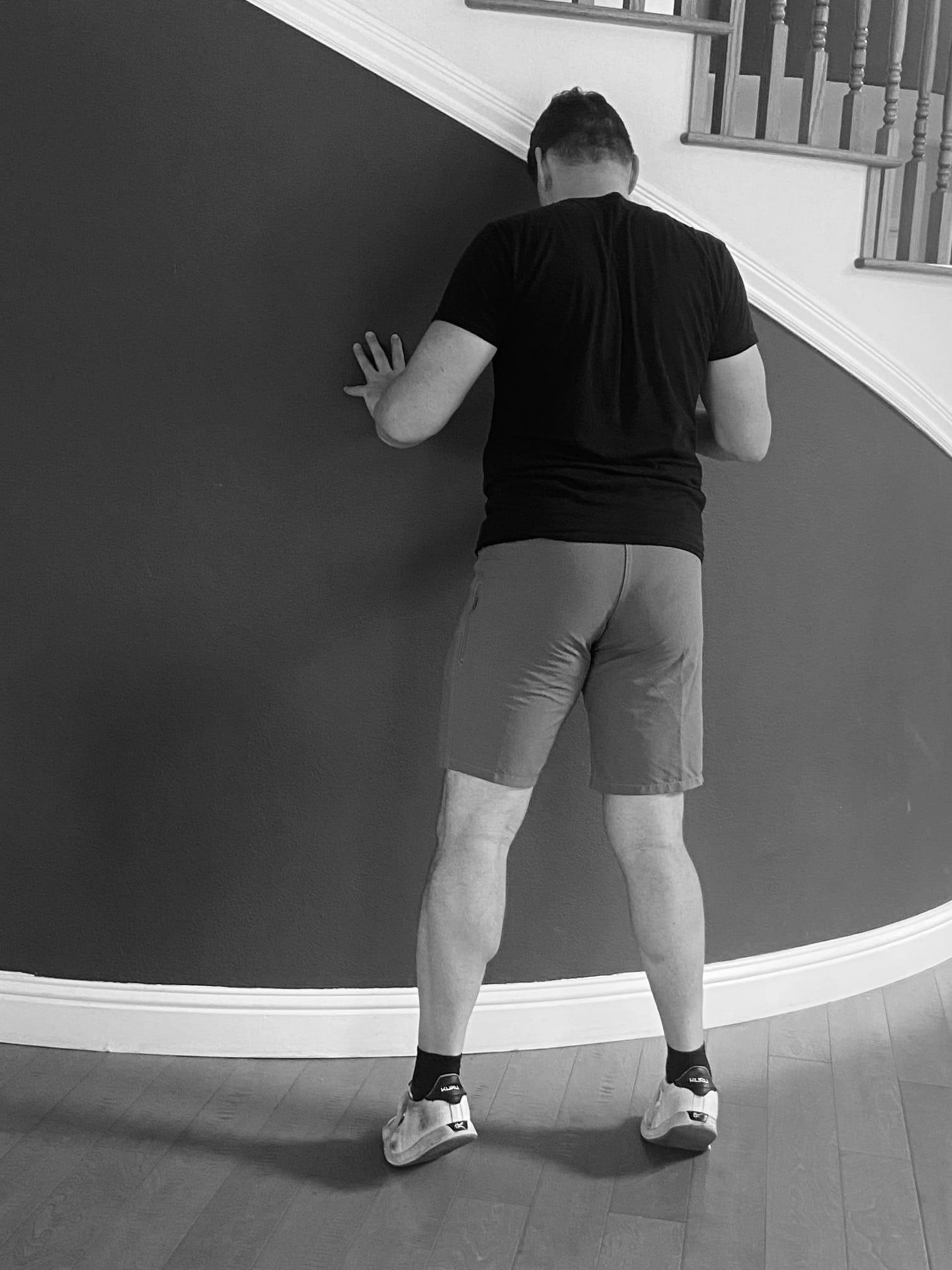
To do this stretch, place your hands on a wall, bringing one leg forward with the knee bent, as above. Keep the other leg back, with your knee bent and foot flat on the ground. You should immediately feel a stretch in your gastrocnemius. Try holding for thirty seconds each side, for two sets. Aim for doing this stretch at least twice daily.
#5 Hiking
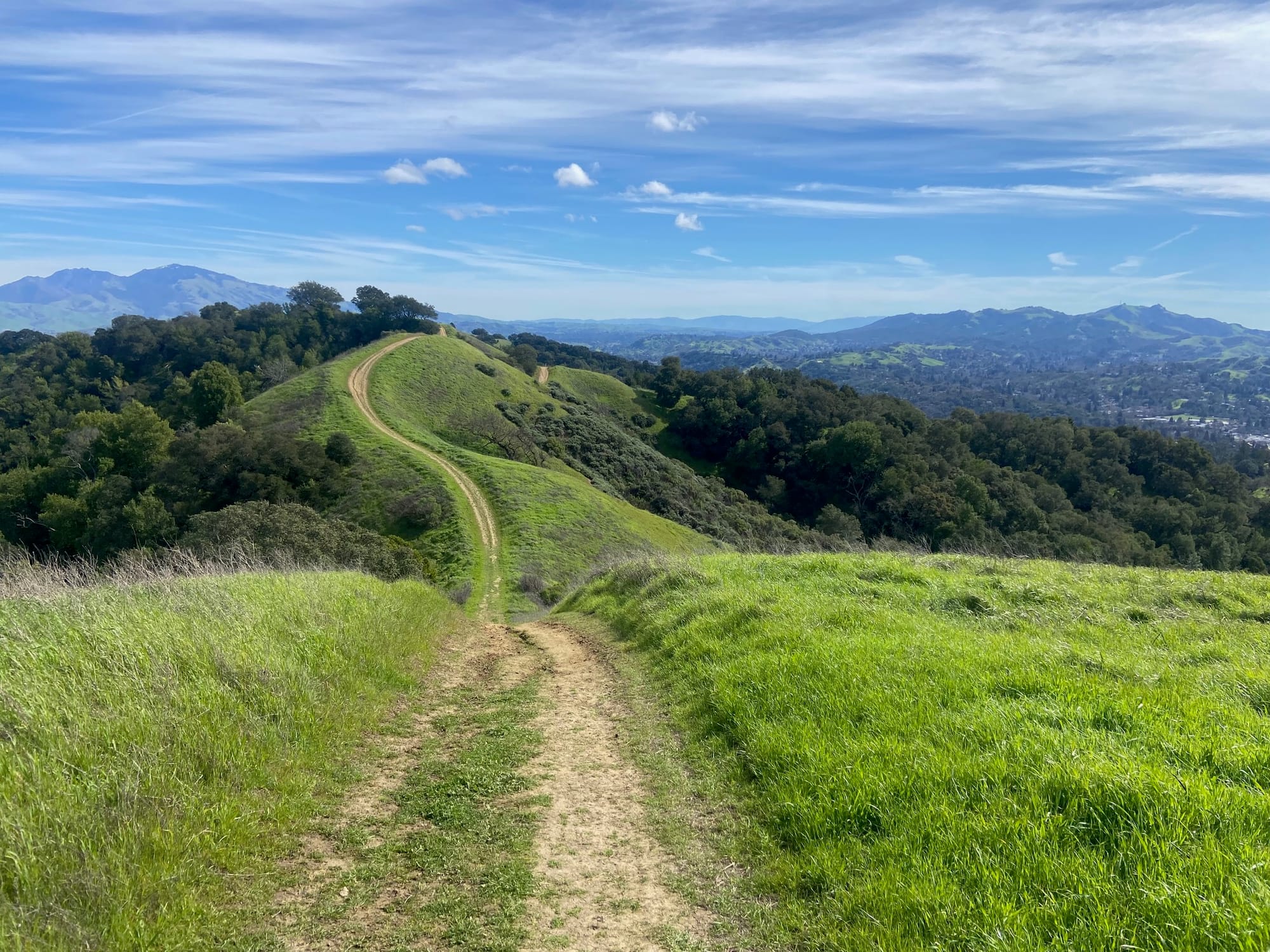
If the other exercises are the "broccoli sprouts" on the ankle fitness menu, this one is the ice cream sundae. At least in my book.
Hiking is one of the best exercises you can do for your foot health. Trail hiking is much more physically demanding than walking on flat, predictable terrain. When the terrain is rutted, slippery, or undulating, more physical strength and effort is required to maintain balance and forward momentum. Consequently, hiking develops much more ankle strength and mobility than walking on paved streets.
As an added bonus, hiking is a sensory-rich experience. Your motor skills are heightened due to the unpredictability of being in an unfamiliar environment. Your mind is singularly focused on where to place your foot so that you won't slip or fall. This is called "proprioception" and refers to how we experience our bodies in space. Think of the amount of concentration necessary to navigate a stream, climb over a log, or secure firm footing on a loose downhill trail.
Put more succinctly, I rarely see someone glued to their cell phones while walking up or down a huge hill.
So, if your body, mind, and spirit are craving some nourishment and attention — go on a hike. Your feet and ankles will thank you, too.
Joshua Brandt is an Oakland based personal trainer. He can be reached at joshua@joshuabrandtpt.com or (415) 412-7339.
If you enjoyed reading this article, please pass it along!
Sources:
1) Alon Rubin et. al. (11/1/2016) "The Association of Ankle Dorsiflexion Range of Motion With Hip and Knee Kinematics During the Lateral Step-down Test." Journal of Orthopedic & Sports Physical Therapy
2) Center for Disease Control (02/06/2026) "Older Adults Falls Data."
3) Cody Lindsay et al. (07/2026) "Ageing alters ankle mechanics and muscle co-contraction patterns across the gait cycle." ScienceDirect
4) ScienceInsights (04/28/2026) "Why Calves Get So Tight and What Actually Loosens Them."

Member discussion