Three Obvious Signs of Physical Decline — and What to Do About It.

There are many obvious benchmarks of fitness. The ability to run a marathon, for example. Or cranking out a set of 30 consecutive push-ups, or bench pressing your body weight.
But there's an unfortunate corollary at the opposite end of the spectrum: there are obvious tell-tale signs of physical decline. And, they often go unnoticed — largely because they are so prevalent in everyday life.
Before I delve into the details, my usual disclaimer: please be cautious when performing these exercises. If you have any pre-existing injuries, please consult a licensed professional before attempting. Be careful operating under the "no pain ... no gain" mantra. The people that carelessly follow that mantra often end up with too much of the former and not enough of the latter.
Sign Number One: The "Seated Assist."
We've all heard the maxim before... "sitting is the new smoking." While that's not exactly true, I've always felt that sitting is the biggest impediment to fitness. But chairs (along with a slew of other things hazardous to your health such as social media, automobiles, and soft drinks) aren't going away anytime soon.
In the mean time, chairs continue to erode our collective fitness in imperceptible ways. Which, of course, constitutes the real problem. If chairs came with the warning that "using this object for long periods of time will lead to back pain, postural distortions, weight gain, and mental health issues," people might view the act of sitting differently.
The elderly have the most fraught relationship with sitting. If you've ever witnessed an older person struggling to get out of a couch, you have a visceral appreciation for the toll that sitting takes. The root of the problem occurs long before that, however. Many people instinctually use their hands to assist them when getting up. In doing so, people neglect the very muscles that contribute to longevity; including the hip flexors, glutes, and abs.
The solution is simple. Don't use your hands when you get up. You can practice this by doing "chair squats."
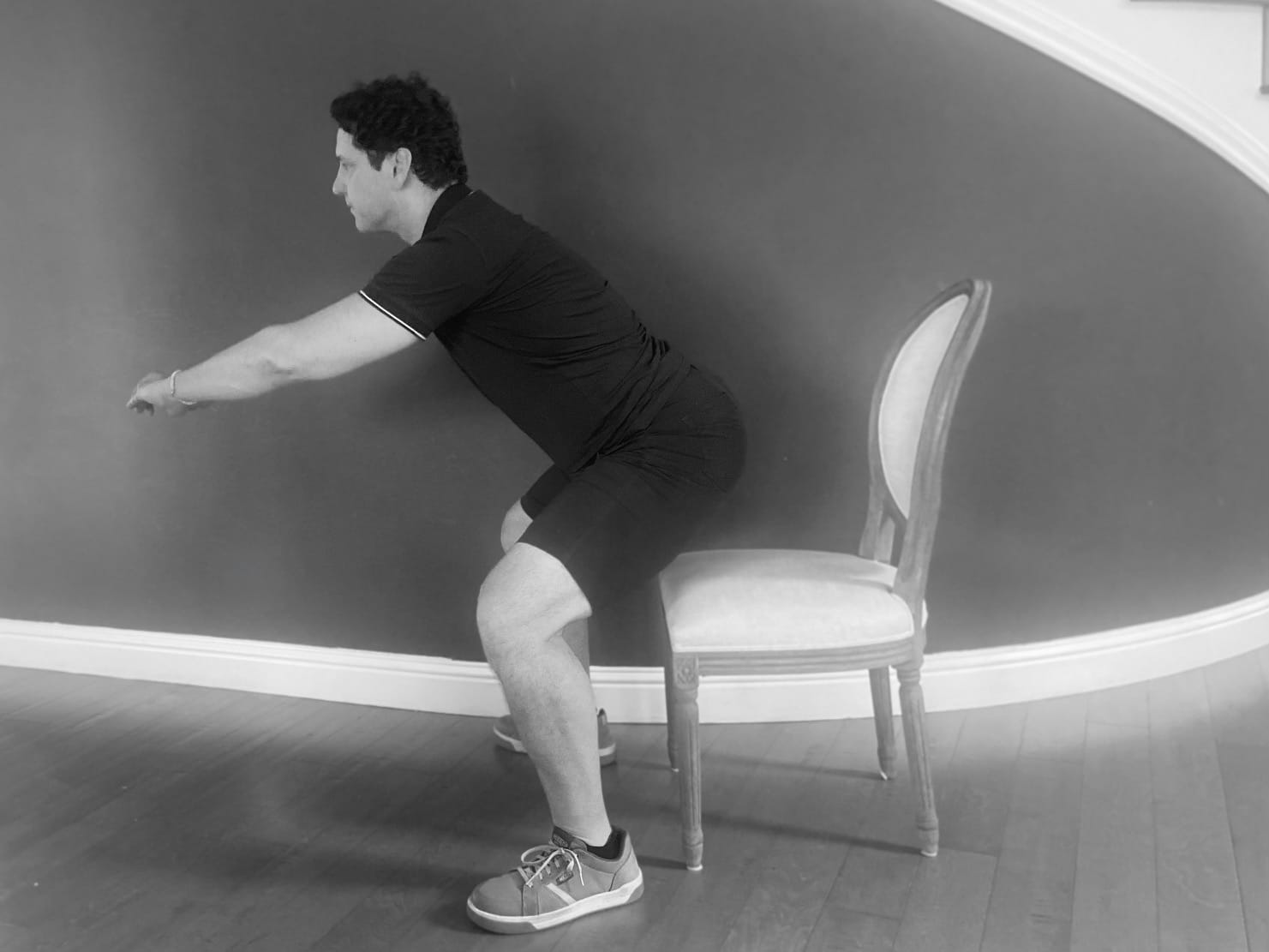
To perform this exercise, select a chair that roughly corresponds to your knees at 90 degrees in seated position. (as above) Start by standing with your feet shoulder-width apart, toes pointing slightly outward.
As you descend, tighten your ab muscles to support your back and maintain proper postural alignment. Keep your weight thrust back and your back straight. Lightly touch the chair with your butt, and then, while contracting your abs, push your heels into a standing position again.
Try for an initial set of ten, and increase in increments of ten. Thirty a day is a great goal.
Sign Number Two: "Bathmophobia."
This condition has nothing to do with dogs or small children, who tend to be cleanliness averse. It actually refers to a "fear of stairs." For people with mobility issues or pre-existing injuries, that fear is very real. The issue is more pronounced when descending the stairs, so that's the aspect I'm going to focus on.
Being fearful of descending stairs is usually precipitated by two factors: proprioception and balance. Although they're often conflated, there are distinctions between the two. "Proprioception" is the sense of your body position and movement in space, whereas "balance" is the ability to maintain stability.
One of the best ways to improve proprioceptive abilities is to walk on uneven terrain. If you're fortunate to live near hiking trails, going on even a short hike with little or no elevation gain can help your sense of proprioception. For starters, being in an unfamiliar environment that demands attention (avoiding poison oak, for example) sharpens your mental acuity and focus. Secondly, it forces you pick a mental "line" and then navigate it successfully. Put differently, walking from the kitchen to the bathroom (assuming you're physically capable of doing it) is mindless and rote. It requires no focus. But our senses come alive when we're thrust into an unfamiliar landscape.
The second aspect alluded to above is balance. Balance is crucial in everyday life, and often neglected in fitness regimens. I do a series of one-legged lifts every day, and balance is something I always emphasize with my clients. Here's a great exercise to enhance balance.
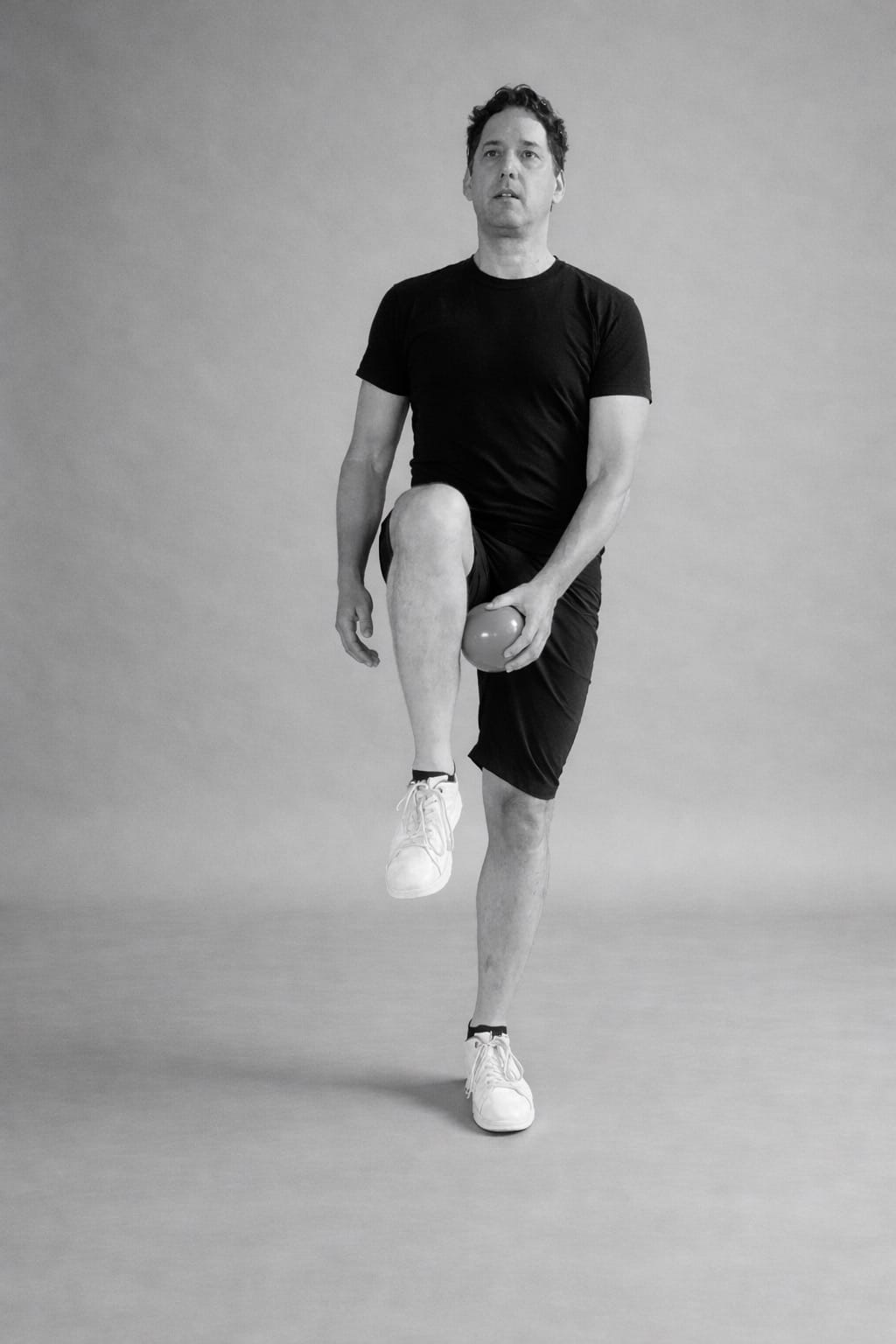
One of the simplest and best exercises involves standing on one leg. I like to thread a ball under one leg, because...well, it's less boring. It's also very challenging. Try for a set on ten continuous thread-unders at first and then increase it by increments of 10. I do a set of 50 with my clients.
Tip: make sure to keep your back straight, knees high, and engage your abs and glutes.
Sign Number Three: Don't Look Now. (Because you can't....)
Quick test: how is your body's "rear-view mirror?" Can you twist your head and neck to the left and right and see what's happening behind you? Many people can't. The reason is simple — we live in a society that perpetually thrusts us forward, whether it's being glued to a cell phone, computer screen, or steering wheel. (Or, in my case, bike handlebars.)
One of the best antidotes is the "Superman."
Ostensibly, it's a very easy exercise. Just lie on your stomach with your feet and knees off the ground with your arms stretched out in front of you. But it's incredibly difficult for most people because their neck and shoulder complexes are rigid and inflexible from so many years of being thrust forward.
Another bonus of the Superman is that, in addition to targeting the shoulders and neck complex, it also targets the glutes and abs. It's a full-body exercise.
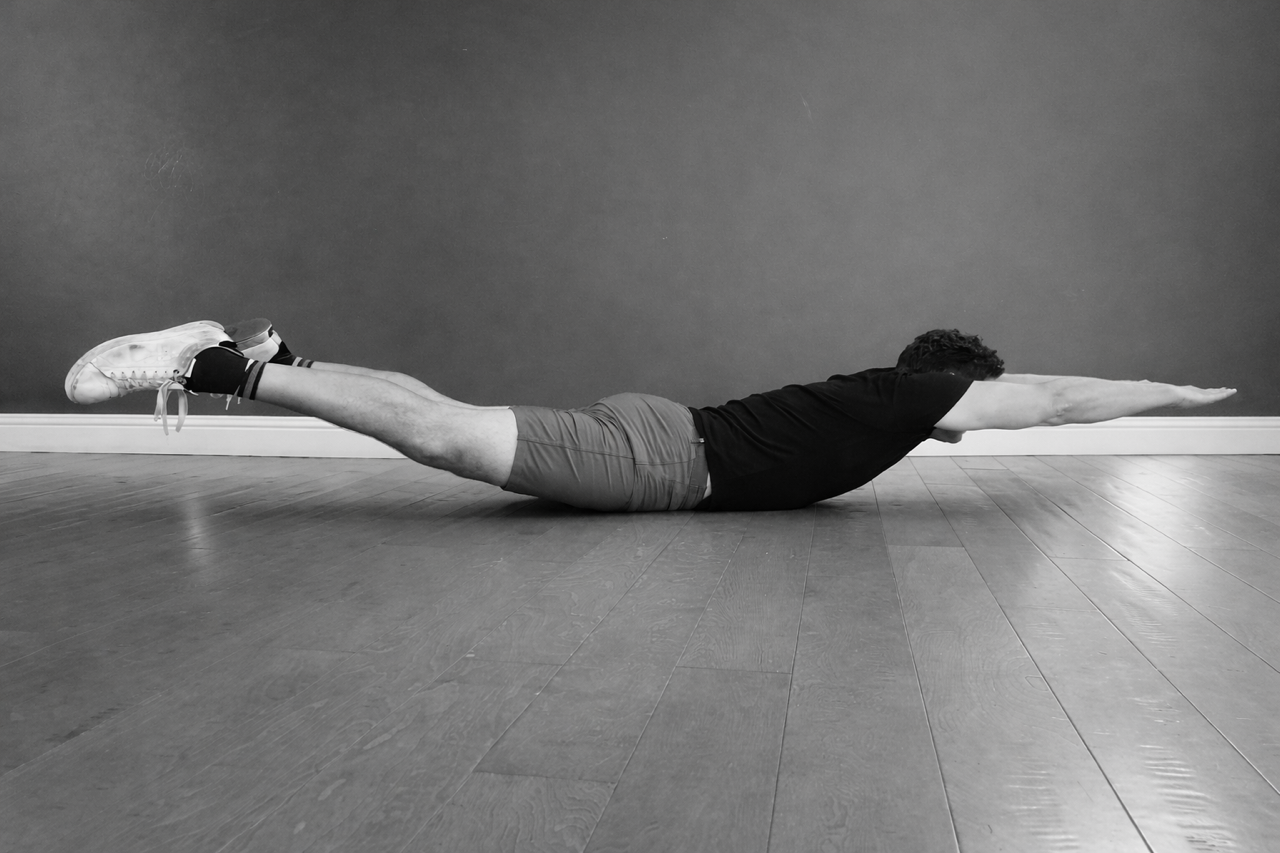
To do this exercise, lie flat on the ground, and then bring both feet and knees off the ground, keeping them straight (as above.) Raise your arms as high above your head as they can go without being too painful. For most people, that won't be very high. Keep your arms as straight as possible, and try not to bend your elbows.
The trick to this exercise is to tighten your butt and abs. They provide the fulcrum that allows you to stabilize yourself. Try holding for twenty seconds. Work your way up to a minute and then increase to two minutes. Three minutes is outstanding.
It's tempting to think of fitness in grand terms. This year, I'm going to run a marathon, do a century ride, or lose sixty pounds. But people often neglect the fact that fitness is similar to house; you build it from the inside out. The foundation supports everything. So, while it's important to look ahead to your goals, just make sure you can glance behind you to see where you've come from.
Joshua Brandt is an Oakland based personal trainer. He can be reached at joshua@joshuabrandtpt.com or (415) 412-7339.
If you enjoyed reading this article, please pass it along!
Member discussion