The Swedish Study and the Legend of Grandfather Heat.
Many years ago, at the dawn of my fitness career, I was approached by an individual with an unusual request. Normally, when I'm approached by people it involves weight loss — particularly if there's a wedding or high school reunion involved.
Not this person.
"I saw some of the stuff you've been doing and it looks interesting," he said.
I took a quick inventory of the guy. If the "Most Interesting Man in the World" was really chiseled, it might've been a good match.
"What are your fitness goals?" I asked.
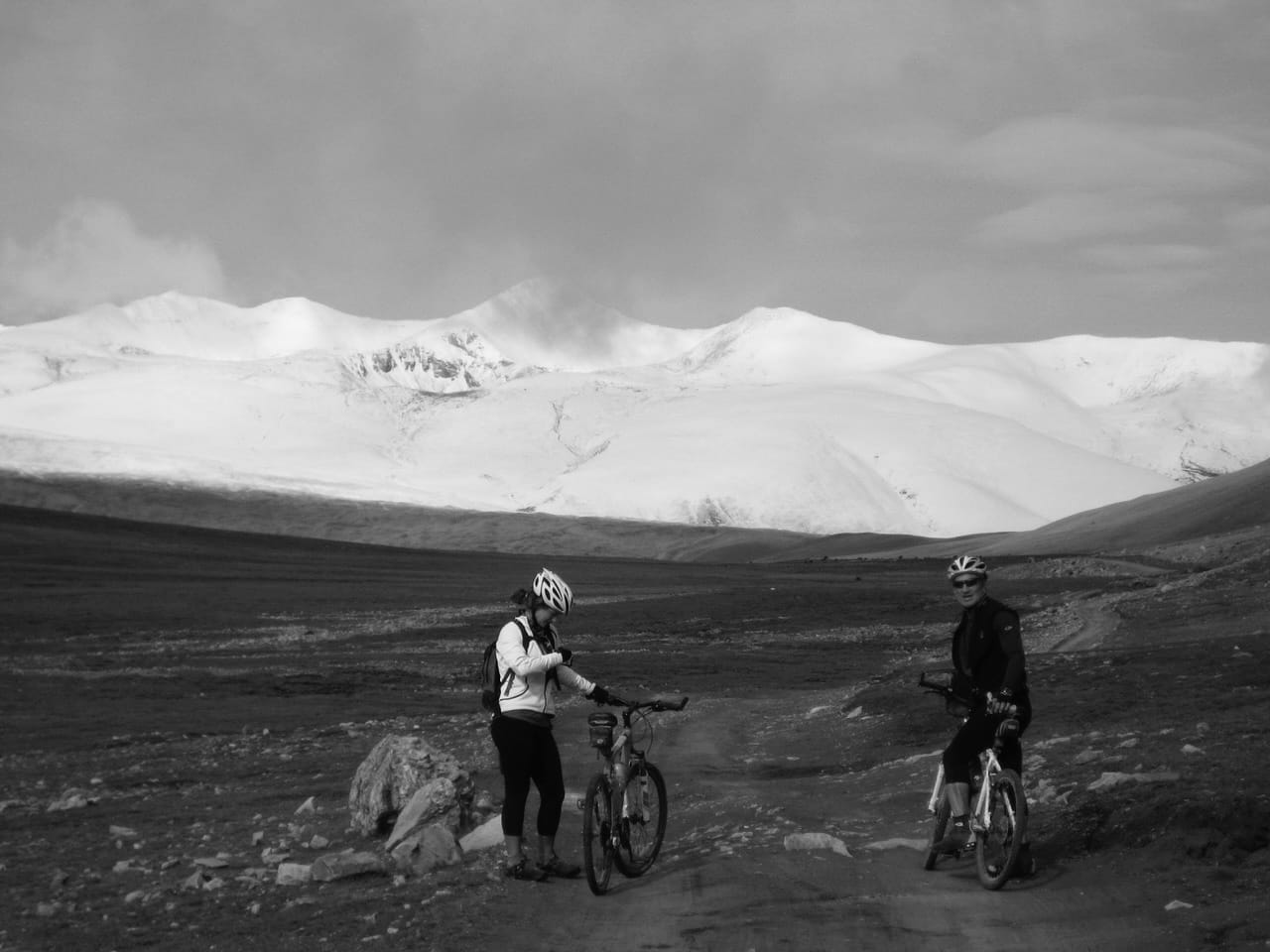
"I'm cycling through Tibet with my daughter for her college graduation and I want to improve my core strength."
That was my introduction to Michael Harris.
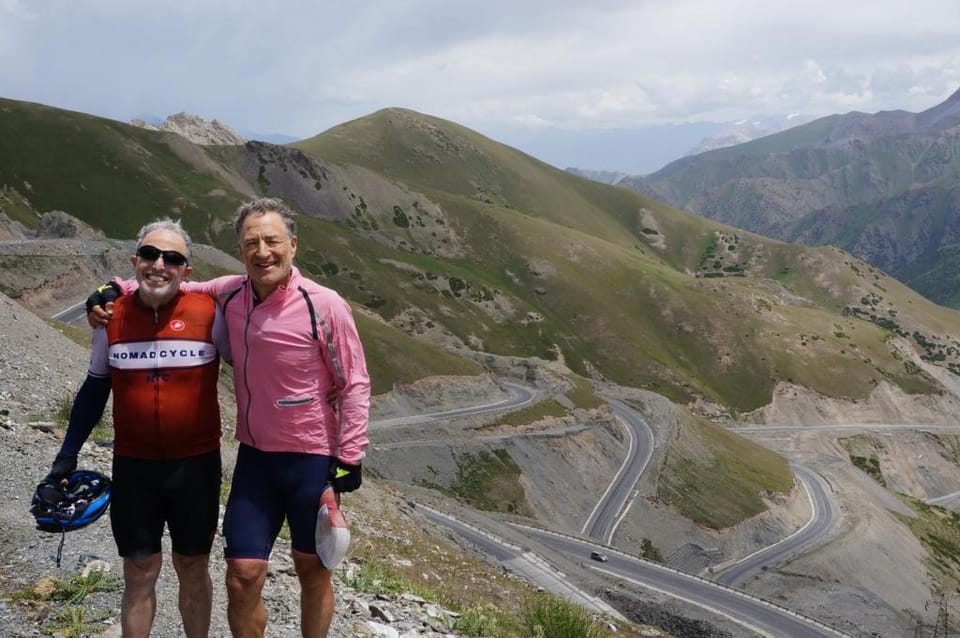
During the ensuing fifteen years, he has not only remained a client, but has also become one of my closest friends. He's also accrued a myriad of monikers: "The Mentor." "The Exemplar." And my personal favorite — "Grandfather Heat."
To say that Michael is an outlier when it comes to aging and fitness would be a severe understatement. After cycling through Tibet at aged 60 with his daughter Zoe, he celebrated his 65th birthday by cycling with his cousin Fred in Khazakastan, climbing 80,000 feet in a little less than three weeks, culminating in an ascent of the Pamir Highway in Tajikistan, often referred to as "The Roof of the World."
To celebrate his 75th birthday this year, he'll be going on a cycling trip to Japan with his cousin, where they'll be doing close to 75,000 feet of climbing — a thousand feet for every birthday. Michael can crank out 40 (plus) quality consecutive push-ups and still sprint faster than most people less than half his age.
Of course, Michael is not the norm. A recent study from Sweden shows exactly how much of an outlier Michael is.
The study, published in December of last year, is unique in that it followed the same cohort of people from the ages of 16 to 63. (1) There were 427 individuals tracked, with almost half of them consisting of women. (48%.) Tests were done at the ages of 16, 27, 34, 51, and 63.
The study drew some interesting conclusions: the physical "peak" occurs a little earlier than thought for most people, and declined dramatically after the age of 40. The study measured muscular endurance (bench press) muscular "power" (jump test) and aerobic capacity (cycling test.) For aerobic capacity and muscular endurance, the "peak years" were 26-36 in both genders. For muscular power, the peak year was 27 for men and 19 for women.
The overall rate of decline was 2.2% per year in all categories, with an average cumulative loss of 30 to 48% by the age of 63. (Muscular power was significantly more impacted by age than the other two categories.)
The central premise of the study shouldn't be a surprise to those of us who've reached middle-age: physical decline is inevitable. But, the good news is that how much we decline is something we can control. People who are more physically active decline at a much lesser rate than sedentary people — hence the variance in the rate of decline highlighted by the study.
Which brings us back to my friend Michael.
Years ago, I went on a local bike ride with several friends, including Michael and his former neighbor. At a rest stop, the neighbor and I were talking about Michael, and I'll never forget what he said.
"Michael just got lucky genetically."
There is a kernel of truth to this. Both of his parents were physically active well into their nineties. Physical activity and movement were always emphasized in the Harris household. And Michael came of age before the advent of social media and excessive screen time. But Michael could've taken that genetic inheritance and opted for a sedentary life. He didn't, obviously. And he reaped the physical rewards.
More importantly, Michael inspires everyone that knows him. For anyone mired in middle-aged ennui and feeling hopelessly ravaged by the indignities of age, Michael is proof: it doesn't have to be this way.
As a coda for this article, I'll say that training someone so athletic and diligent is certainly rewarding — but it's also not without the occasional awkward moment.
Over a decade ago, I did one of the most miserable bike rides of my life with Michael. We were doing a 4,000 foot climb in Napa during the height of Summer, and it was miserably hot. I was cycling from shady spot to shady spot, just trying to find a respite from the heat. Michael was up ahead of me....somewhere.
When we finally got back to his house, his mother (who was in her late nineties) was on the porch sipping a cold drink.
"How was the ride, dear?" she asked me.
"Miserable," I responded. "It was way too hot and your son was ahead of me the entire ride."
Michael's mom processed those words as she stirred her drink. She looked like she was carefully calibrating her response, and then fixed me with a quizzical stare.
"Well, aren't you his trainer, dear?"
Sources:
Maria Westerstahl et al. (11/16/2025) "Rise and Fall of Physical Capacity in a General Population: A 47‐Year Longitudinal Study." PubMed
Joshua Brandt is an Oakland based personal trainer. He can be reached at joshua@joshuabrandtpt.com or (415) 412-7339.
If you enjoyed reading this article, please pass it along!
Member discussion