The Agony of De Feet.
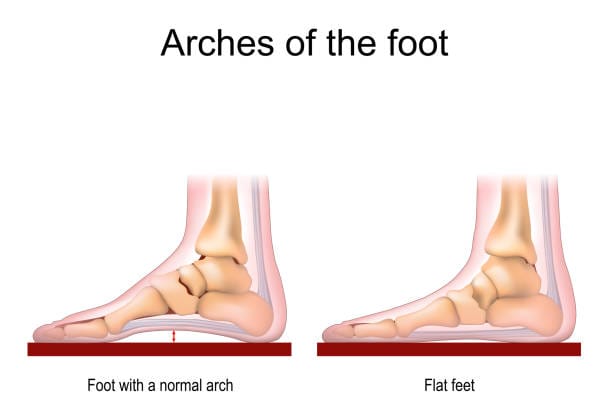
I'm a member of a secret club. It's not really that exclusive. According to some estimates, 30 percent of the U.S. population belongs to the club. There's no membership fees, secret handshakes, or annual get-togethers. But, if you're a member of the "club" you're reminded of your membership status on a daily basis.
I have flat feet.
The condition is often given short shrift in cliches and tropes ("caught flat-footed," military deferments, etc) but the ramifications are very real. I'm acutely aware of all the surfaces I walk on. I can tell the difference between "soft wood" floors and less forgiving surfaces from the minute I set foot in a new place. (In my experience, older houses and apartments used better quality wood and it tends to be much more forgiving.)
If I know in advance that a dinner gathering has a "no shoes" policy, I always make sure to check with the host and bring my indoor sandals. I have these, and I highly recommend them: https://www.oofos.com/products/mens-ooahh-slide-sandal-dune.
Years ago, when I first started my journey toward foot health, a podiatrist took one look at my feet and was flummoxed. "What happened to your aches?" he asked. "I don't know," I told him. "Maybe I left them under my futon."
That encounter was the first inkling that I would need to start a serious regimen. I also came to the regrettable conclusion that my feet would never grace the cover a "foot fetishist" calendar, which is kind of a bummer.
In this article, I want to explore the ramifications of having flat feet, what causes them, and some exercises and stretches to strengthen your feet and mitigate the damage.
What causes flat feet?
There are a myriad of causes for flat feet or "fallen arches." That distinction is important. Flat feet are often a congenital condition. In other words, they're a gift bequeathed by Great Grandpa Ned. "Fallen arches" happen over time, usually due to trauma or excessive use. For years I played basketball on concrete — which almost certainly had an impact on my arches.
Other factors include being very overweight, and wearing improper footwear. Shoes that constrict your toes or don't have an arch can exacerbate the situation. My opinion contradicts the "Minimal Support Orthodoxy" which holds that the less material in your shoes (or going barefoot) the better. I've tested this theory with my own two feet, and — sufficed to say — I think that theory falls "flat."
My personal recommendation for footwear is "Keen" footwear. I think they make excellent shoes for a variety of terrains and purposes. https://www.keenfootwear.com
What are the ramifications of flat feet?
The medial longitudinal arch (which runs along the bottom of your foot) is the key component that regulates impact when your foot hits solid ground. Additionally, it helps regulate stability and balance when walking or running. When the arch is impaired or damaged (in other words, when your feet are "flat"), it can pronate, or turn "inward," — leading to altered weight distribution. This, in turn, can affect your ankles, knees, hips, and back. Although I've avoided back pain for most of my life, my ankles are "hyper flexible" due to foot pronation, which means they're very prone to injury. I also have knee injuries from my years of playing basketball, and my feet inhibited the recovery process.
What can you do to help strengthen your feet and mitigate the damage?
There are several exercises that can help alleviate the discomfort associated with fast feet. One of them is the clear winner. I'll get to that last. But, before I start, my usual disclaimer: please be cautious when performing these exercises. If you have any pre-existing injuries, please consult a licensed professional before attempting. Be careful operating under the "no pain ... no gain" mantra. The people that carelessly follow that mantra often end up with too much of the former and not enough of the latter.
Exercise Number One: Towel Scrunches.
(All photo credits: Shai Brandt. AKA my daughter.)
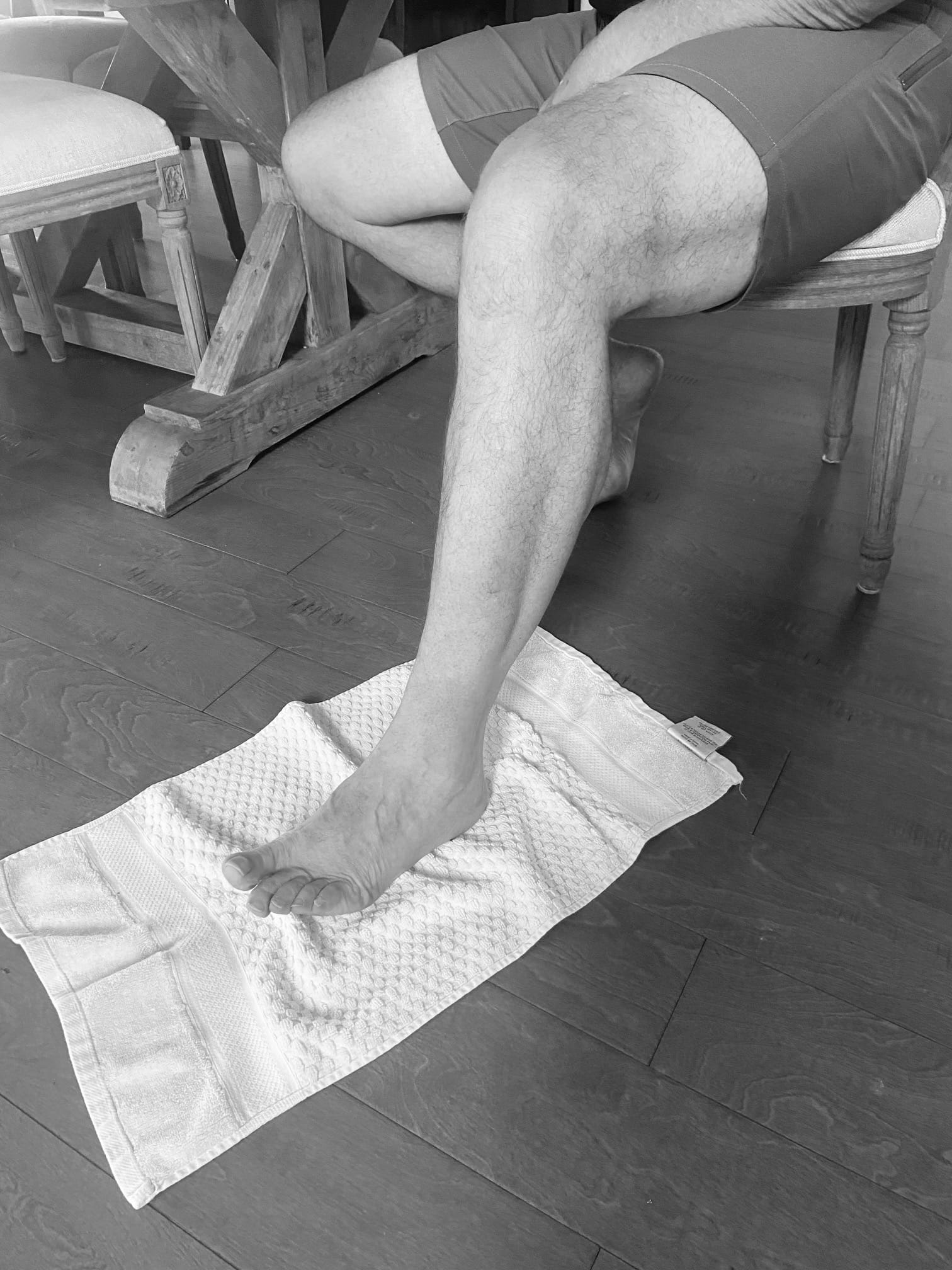
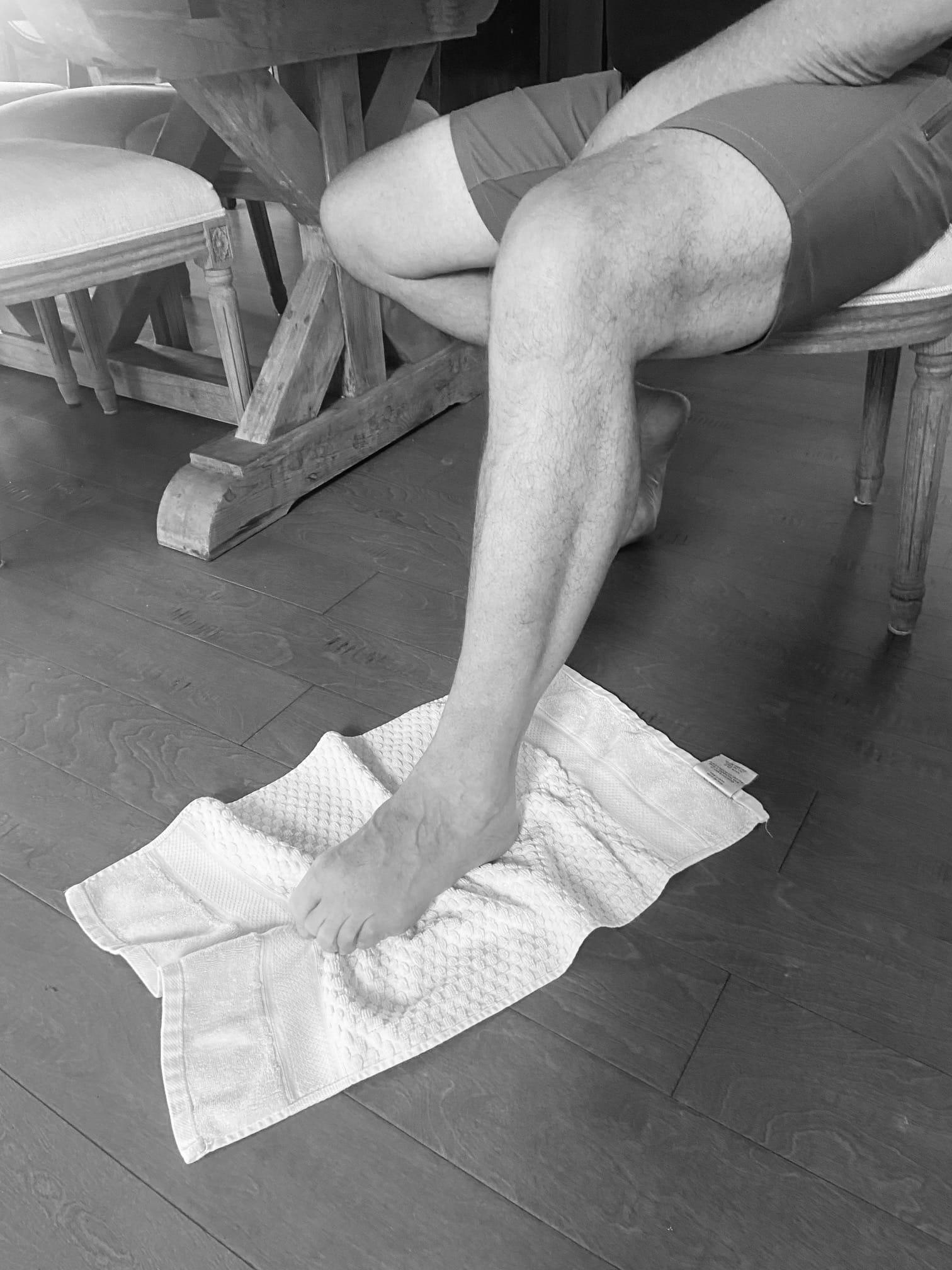
Let's get this one out of the way first. It's simultaneously one of the best exercises for your feet and one of the most boring. Excruciatingly boring. Think of it as the broccoli of a flat feet exercise diet. With those caveats in place, grab a towel and place it under your feet. Extend all of your toes upward. Then, bend your toes, grabbing the towel with them, and scrunch it up. Repeat. You will notice the effect on your toes and foot muscles right away. This exercise works — even if it is mind-numbingly boring.
Try for three minutes per day, gradually working your way up to five minutes.
Exercise Number Two: Single Leg Lifts.
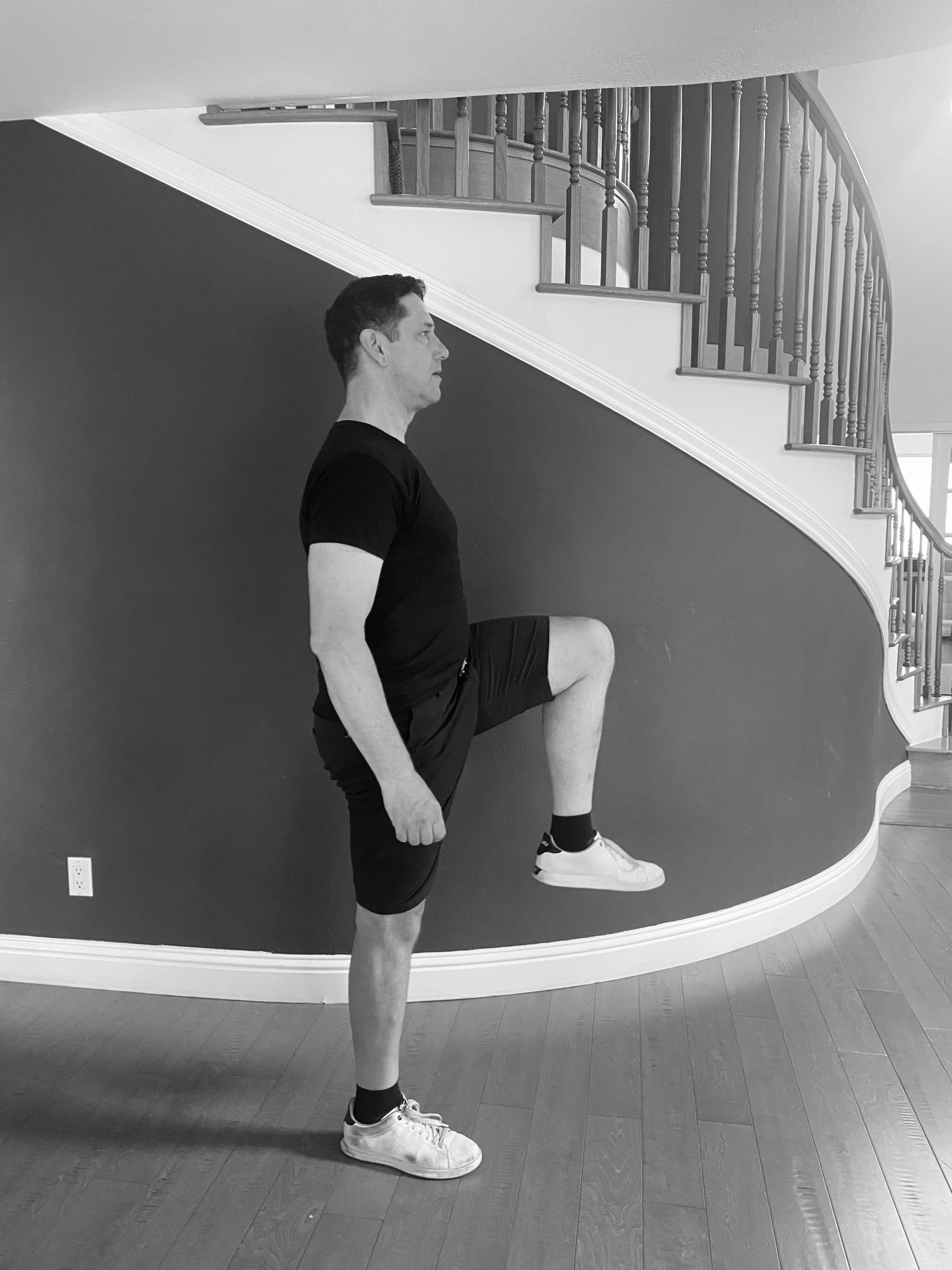
This is a fantastic exercise that yields results across many different fronts. Stand straight (this is very important) and lift one leg up with your knee bent. Try to get your leg at least waist high. Try to dig into the ground with your foot. (A yoga mat will be helpful, particularly if you're doing the exercise barefoot.) You will immediately feel your foot muscles and ankle complex engaging.
Big side benefit: the largest muscle group engaged in this exercise? The glutes. They're actively involved in stabilizing you during the exercise. Another side benefit: guess which muscle group is the most active in assisting with raising your knee to your waist? That's right ...everyone's second favorite muscle group (after the glutes) — the abs. They are going to be working overtime to sustain your leg being hoisted in the air.
Lastly, this exercise improves the most often neglected component of fitness: balance. It's an exercise you should do; even if you don't have flat feet. Loss of balance is a big concern, particularly as we age. So, if you're looking of for a real "bang for your buck" exercise for flat feet — this is the one.
If you need help to balance initially, try gently touching a wall until you can do the movement without assistance.
Try to balance for thirty seconds, and increase in increments of thirty seconds. Two minutes on each leg is a great goal.
Exercise Number Three: Calf Raises
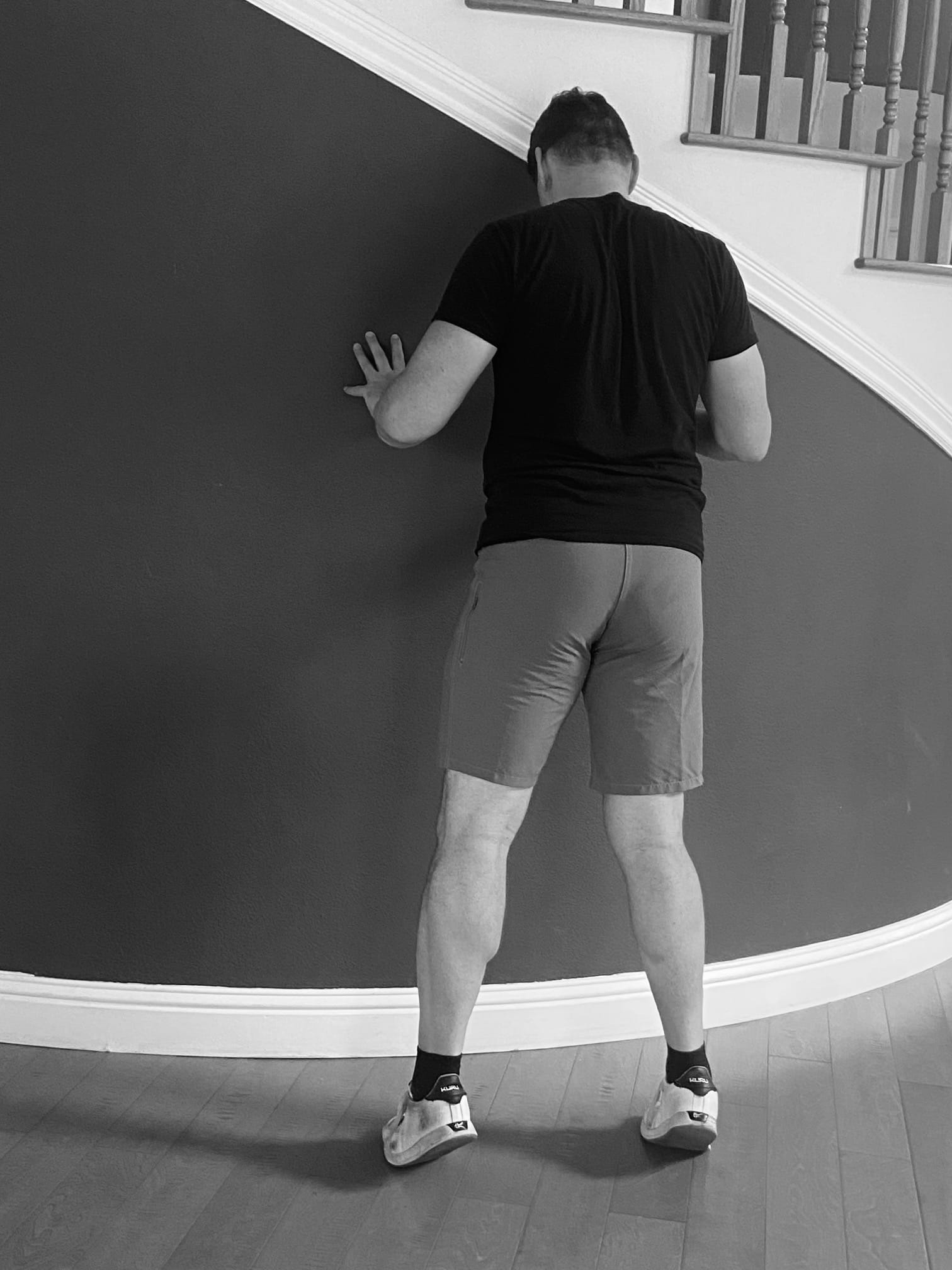
This exercise falls somewhere in between the towel scrunches and the one-legged lifts: not as boring as the former but not nearly the "bang for your buck" as the latter. It's very effective at targeting the muscles (the gastrocnemius and soleus) that support the arches of the feet.
Place both hands lightly on a wall. Lift your heels off the ground as high as you can without discomfort. Hold for a five count. Lower your feet to the ground.
Try for a count of ten and increase in increments of ten. Aim for fifty.
Exercise Number Four (advanced): BOSU Ball Squats
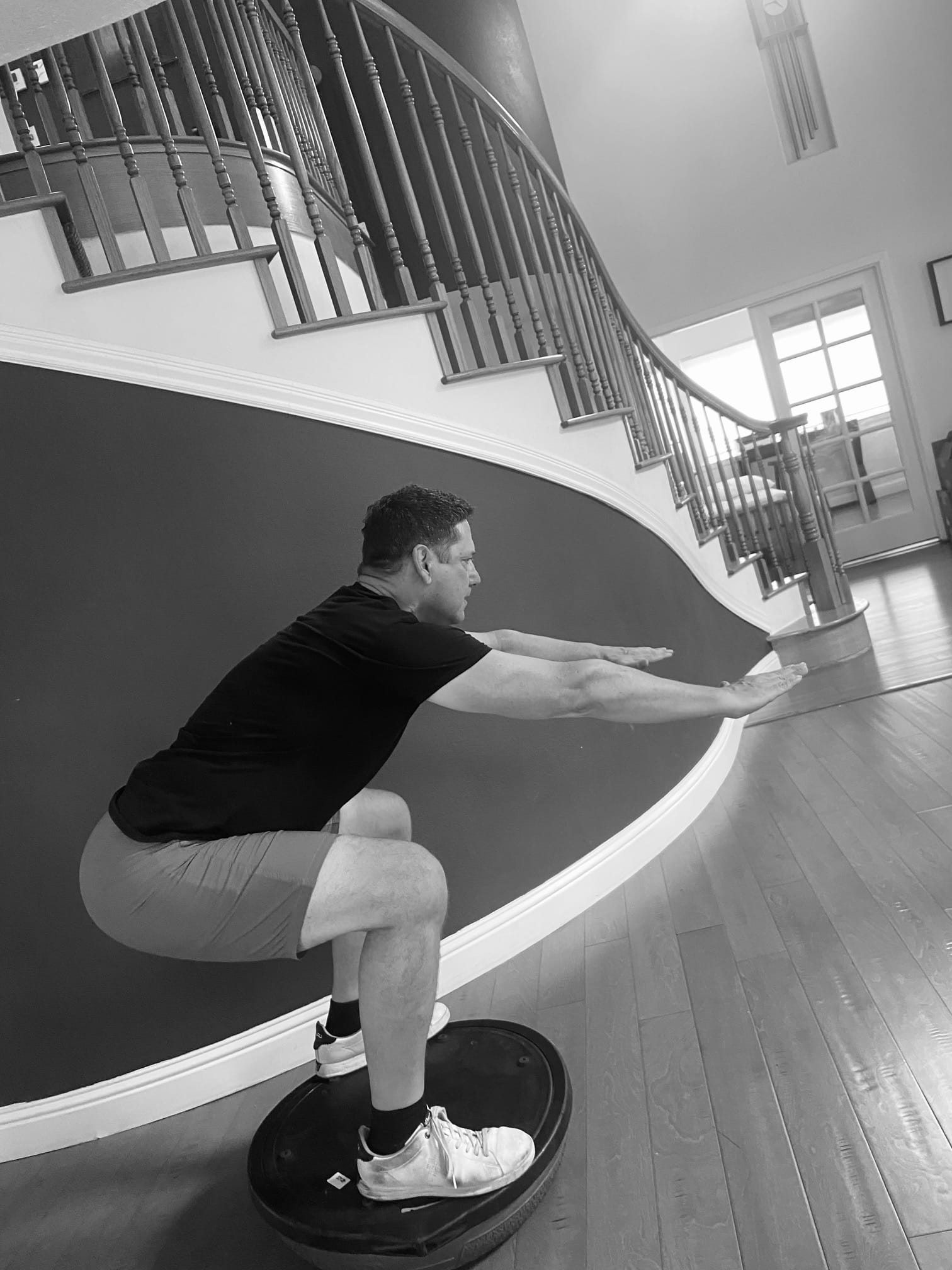
This exercise rivals the single leg lift for the all-around benefits. Engaged glutes? Check. Engaged abs? Check. Balance? Well, it is called a "balance ball." Most importantly, feet muscles engaged? Absolutely. Most people new to the BOSU Ball (especially those people with flat feet) say that their feet are "burning" within a few minutes of doing squats. That's because your smaller feet muscles are working overtime to grip the ball. It's a little known benefit of BOSU Ball workouts.
As noted, this exercise isn't for complete novices. I don't want to go too into the weeds about the BOSU Ball, but here's a tutorial for beginners looking for ways to start: https://www.youtube.com/watch?v=MNW73TdIKBY (This video has an a narrator with an English accent, which is an added bonus.)
Use a wall for support and balance if you're struggling initially. Keep your head up and back straight, with your knees level with your feet as you squat. Arms out straight. Squat until your butt is roughly parallel with your knees (as above in the picture). Hold for a count of five and then come up.
Try for a set of 20. Increase by increments of 20. 100 squats is a great goal.
And the winner is ...
Exercise Number Five: Trail Walking/Hiking
This is one of the best exercises you can do for you foot health. And for your mental health. And for sensory activity. If walking in the woods isn't a panacea .... well, it's pretty damn close. That's assuming that (a) you live within a reasonable distance of outdoor spaces and (b) you have the luxury of time of time to take an hour (or so) hike. But if time and circumstances permit, hiking or trail walking is an immensely rewarding experience.
For starters, trail hiking is much more physically demanding than walking on flat, predictable terrain. When the terrain is rutted, slippery, or undulating, more physical strength and effort is required to maintain balance and forward momentum. Consequently, trail walking is much more taxing on the foot and ankle complex than walking on a typical paved street. I always wear ankle support sleeves when hiking, because (as alluded to above) I have hyper-flexible ankles.
Also, as anyone who has hiked up a steep dirt hill will tell you, it's a pain in the ass. Literally. Your glutes are working overtime to stabilize your leg complex when ascending a steep hill. Other muscle groups (hip flexors, abs, calves etc.) are also engaged in stabilizing you and generating momentum.
Secondly, hiking and trail walking is a sensory-rich experience. Your motor skills are heightened due to to the unpredictability of walking on a trail. Your mind is singularly focused on where to place your foot so that you won't slip or fall. This is called "proprioception" and refers to how we experience our bodies in space. Think of the amount of concentration necessary to navigate a stream, climb over a log, or secure firm footing on a loose downhill trail. In a society facing an attention deficit epidemic, trail walking is a great way to sharpen your senses and restore equilibrium.
Put more succinctly, rarely do I see someone glued to their cell phones while walking up or down a huge hill.
So, if your body, mind, and spirit are craving some nourishment and attention — go on a hike. Your feet will thank you, too.
Sources:
1) Wahuj Hakeem and Dr. Fouzia Rashid "Flat feet and bone health: An orthopedic review of impacts on long-term musculoskeletal health and
management strategies." International Journal of Orthopaedics Sciences 11/08/24
2) CharlotteWattsHealth.com "The Benefits of Walking on Uneven Ground" 03/18/2022
Joshua Brandt is an Oakland based personal trainer. He can be reached at joshua@joshuabrandtpt.com or (415) 412-7339.
If you enjoyed reading this article, please pass it along!
Member discussion