In Praise of Unheralded Muscles: The Transverse Abdominis.
In almost two decades as a personal trainer, I've come to think of the human body as a compilation of "muscle hierarchies." Each and every muscle has its role and serves a valuable function, of course. But some muscles just occupy more real estate in the public imagination. Let's call this group the Hierarchy of Perceived Value.
Take the biceps and pec muscles — AKA the Mick Jagger and Keith Richards ("The "Glimmer Twins") of the human anatomy. They're the consummate showmen: just substitute a tight fitting t-shirt instead of klieg lights. The biceps and pecs have become a shorthand for fitness. Got bulging biceps or protruding pecs? Then you must be fit!
Wrong.
There is another group of muscles that I call the Hierarchy of Actual Value. They don't receive the hosannas and admiring glances. They toil largely in anonymity, and their contributions are ignored on Instagram and TikTok. These muscles shun the limelight while their glamorous counterparts court the paparazzi. But they play a much more crucial role in the human body.
I give you the "Transverse Abdominis."
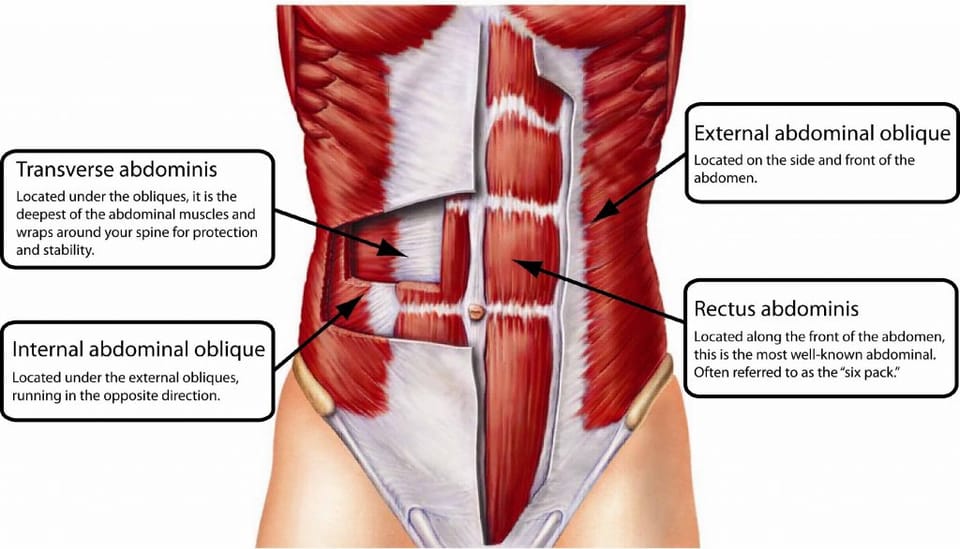
I have a lot of sympathy for the transverse abdominis (TA). It lives in a really ritzy neighborhood with swanky instagrammable muscles. To the north is the rectus abdominis, AKA the "six-pack." Everyone craves and adores this muscle group. But the truth is, the rectus abdominis is a relatively shallow muscle group. They look really good, but they're not intimately connected with movement.
To the south, we have the glutes. The glutes are unique in that they've been lionized in lyrics, fetishized on film, AND they're intimately connected with functional movement.
Lastly, just around the corner from the TA is the multifidus. This muscle group is colloquially known as the "back muscles." They often show up on film. Unfortunately, it's the wrong kind of films: usually MRIs or X-rays. They're highly prone to injury, and one of the main reasons is that people don't strengthen their core. If your TA isn't strong, inevitably you will suffer back pain. (1)
The TA wraps around the body's trunk and is the deepest of the abdominal muscles. It serves a myriad of important functions, including supporting the spine and pelvic girdle, assisting in proper posture, and stabilizing the torso during movements like bending or twisting.
In short, the TA is a very big deal. It gets my vote for the most underrated muscle in the human body. Here are some exercises to target the TA, listed in order from basic to more advanced.
Exercise disclaimer: please be cautious when performing these exercises. If you have any pre-existing injuries, please consult a licensed professional before attempting. Be careful operating under the "no pain ... no gain" mantra. The people that carelessly follow that mantra often end up with too much of the former and not enough of the latter.
The Plank.
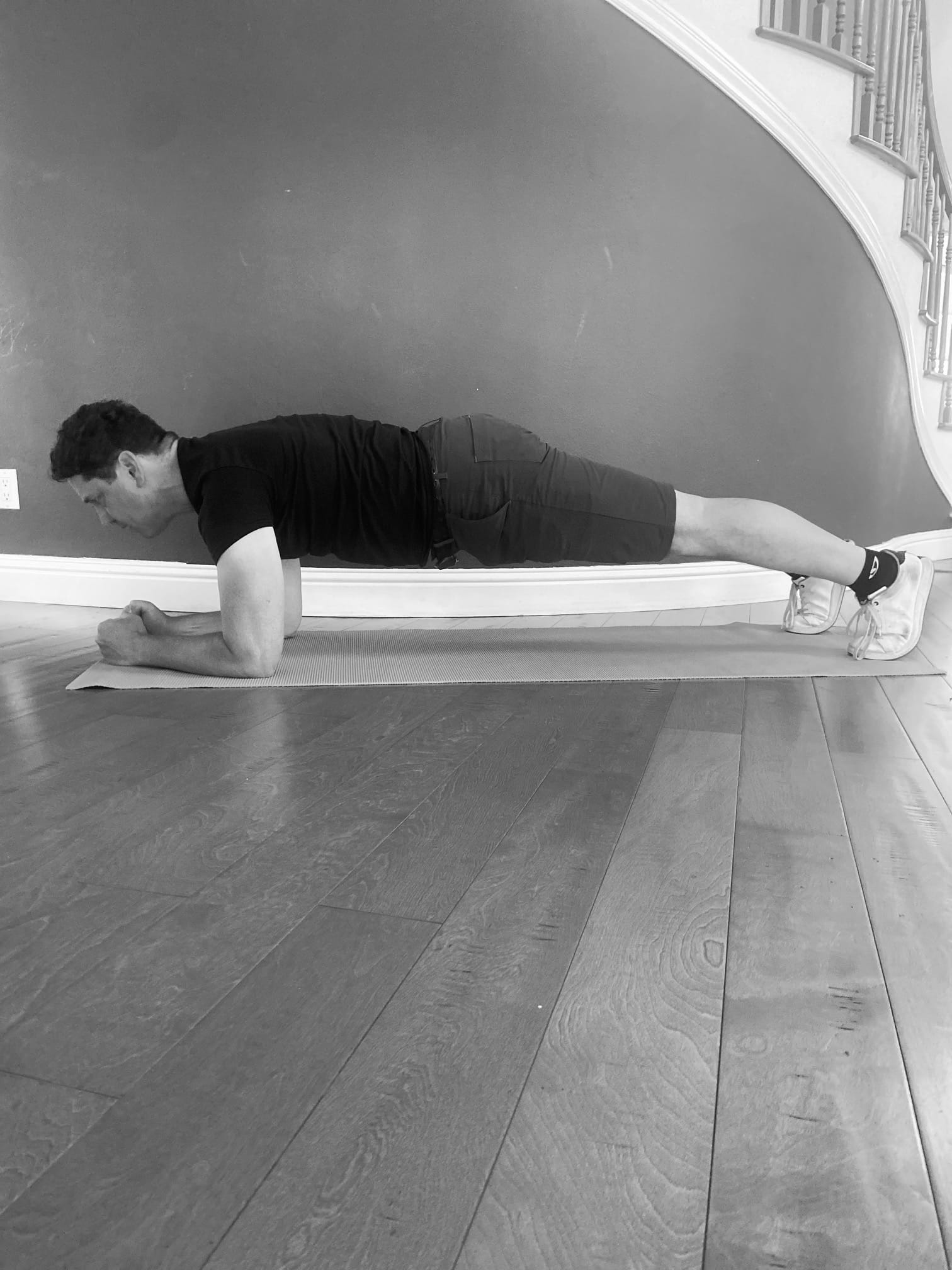
This is one of the three bedrock bodyweight exercises along with push-ups and squats. (Some people consider this list to be a quartet and include pull-ups.)
Start with your elbows on the ground (shoulder length apart) and knees off the ground. Feet should be roughly shoulder length apart. Tighten your glutes (very important!) and abs. Make sure your back is level and not sagging. Try for ten seconds initially. Then increase it for another ten seconds. One minute is fantastic. Two minutes is great. Anything beyond that is exceptional. Aim for 2X per day.
The Bird-Dog
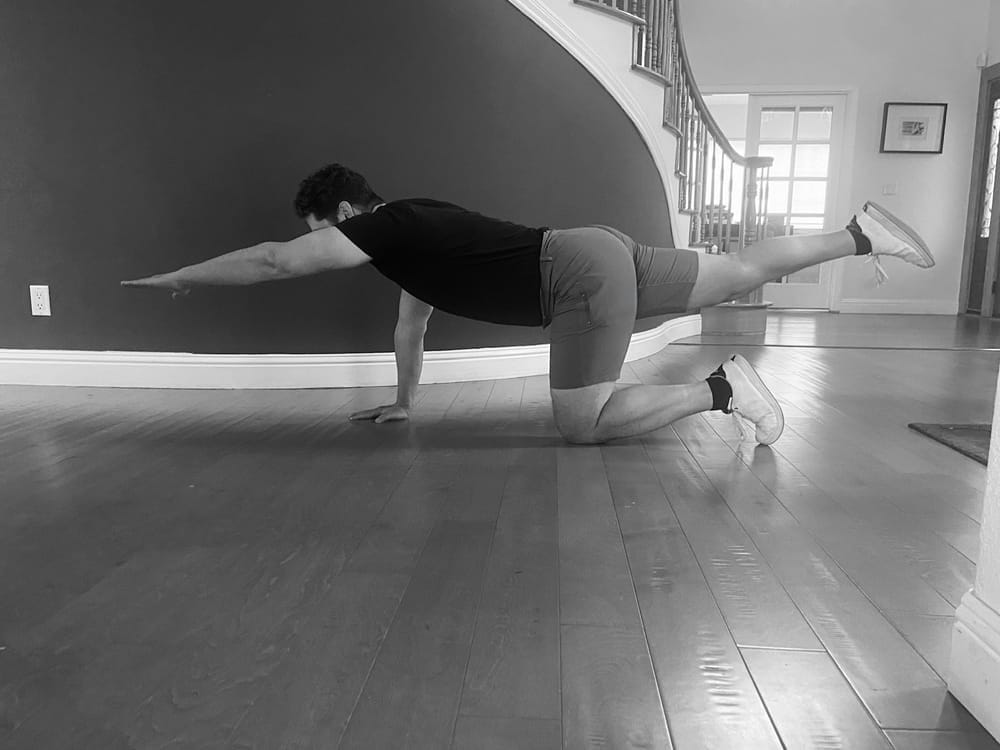
In addition to the TA muscles, the Bird-Dog targets the lower back, glutes, and hamstrings. Begin with both hands and knees on the ground. Now raise your opposite leg and opposite arm out. Try to remain level. Arms and legs straight. (A mirror would be helpful if available.) As with the plank, it's important to contract your glutes and abs.
Try for thirty seconds on each side , and work your way up to one minute each side. Aim for 2-3X per day.
The Russian Twist.
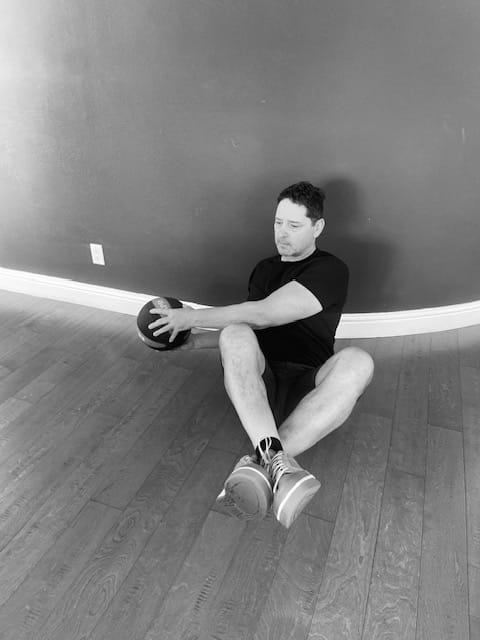
Sit on the ground with your feet in the air. Make sure your back is straight (rounding your back will de-emphasize your ab muscles and place strain on your lower back). Place both feet in the air and take a medicine ball (or weight) back and forth, aiming for a full extension. This exercise really targets both the TA and the obliques (side stomach muscles).
Try for a set of 25 at first (one way counts as "1") and increase in increments of 25. My clients typically do a set of 100 with five to eight pound weights.
Alternative basic version: sit on the ground with your knees bent and feet on the ground. Follow the instructions above.
The "Plank Rows."
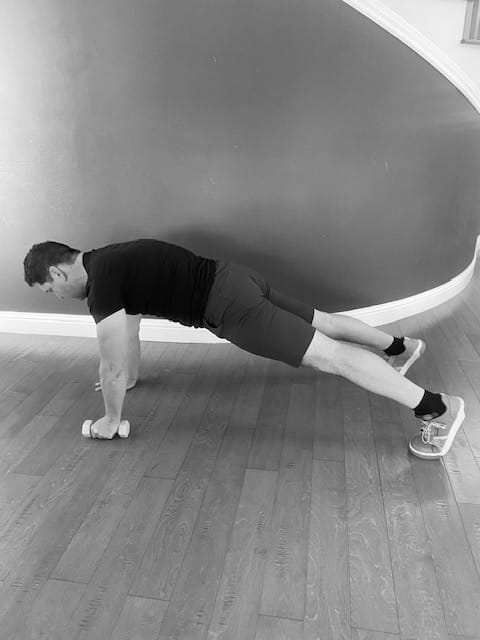
Begin in a standard push-up stance as seen above. Use a smaller weight (no heavier than ten pounds). Make sure your back isn't sagging (it's OK to raise your back slightly) and tighten your glutes and stomach muscles. Then, take one arm straight back, making sure your elbow isn't bent. Bending your elbow will target your triceps and not your TA and core muscles.
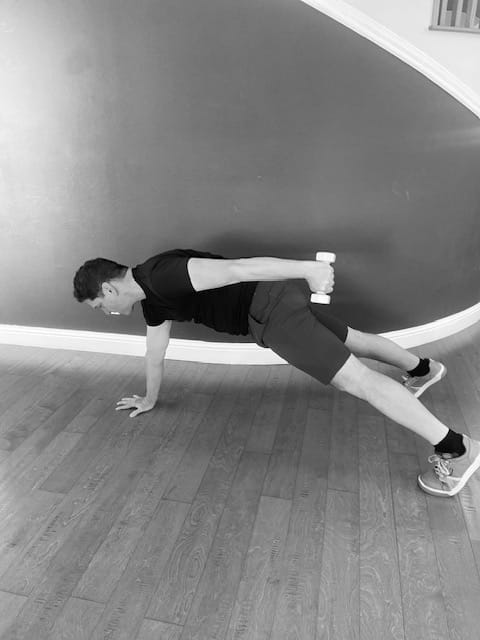
Try for a set of twenty initially (10 on each side). Progress in increments of ten. My clients do a set of 60 during the sessions. It's a great full-body exercise.
Sources:
Christine Linders (08/29/2019) "The Critical Role of Development of the Transversus Abdominis in the Prevention and Treatment of Low Back Pain." PubMed
Joshua Brandt is an Oakland based personal trainer. He can be reached at joshua@joshuabrandtpt.com or (415) 412-7339.
If you enjoyed reading this article, please pass it along!
Member discussion