Grab Your "Passport" to Health: Moving in Different Planes of Motion.
Most of us are creatures of habit. Some of us more than others. (Guilty as charged.) That obstinacy results in a fitness "rut." Just as traveling enriches us, the human body craves variety.
I've written before about the limitations of most gym machines. You can read the article here: https://beneath-the-skin.ghost.io/rage-against-the-machines-2/. The main problem with most exercise machines is that they don't allow you to move in different directions. In the fitness world, the term for that is "planes of motion."
Think about the mundane activities that we do every day requiring a complex choreography of muscular coordination. Getting out of the car, for example. Stooping to find something under the bed. Lifting a heavy suitcase. All these activities require a high degree of twisting, turning, pulling and pushing. If we limit our exercise regimen to motions that we're intimately familiar with, we're not optimizing our health and fitness — and possibly inviting injury.
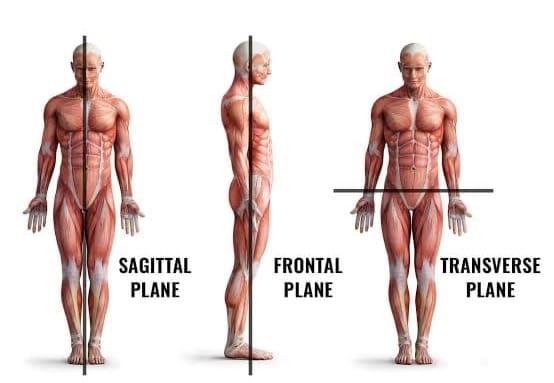
The Sagittal Plane is the most common pane of motion. Think of the body as being bisected into the left half and right half, as in the picture above. This movement entails forward and backward motions, or flexion and extension. Common exercises in this plane of motion include walking and running, squats, and doing weighted curls.
The Frontal (or Coronal) Plane divides the body into front and back halves. Here, the body is moving in a side-to-side (or lateral) motion. This process is also known as abduction or adduction. Muscles and limbs are extended out or drawn in to the center of the body. Movement in the frontal plane usually involves the hips or shoulders, as these are the joints with the widest range of motion. Examples include side lunges and jumping jacks.
The Transverse Plane bisects the body into top and bottom halves and involves rotation and twisting. This is the plane of motion where most injuries occur (such as ACL/meniscus tears when pivoting.) Examples of this plane of motion include swinging a baseball bat or golfing.
Here are some of my favorites exercises (or movements) that involve different planes of motion.
But before we start, my usual disclaimer: please be cautious when performing these exercises. If you have any pre-existing injuries, please consult a licensed professional before attempting. Be careful operating under the "no pain ... no gain" mantra. The people that carelessly follow that mantra often end up with too much of the former and not enough of the latter.
#1 The Harris Triples.
Both my clients and avid readers of this blog (yes...there's overlap!) recognize this movement, which is named after one of my closest friends and clients. I've referenced it a few times in my blog. I think it's the best stretch in the world.
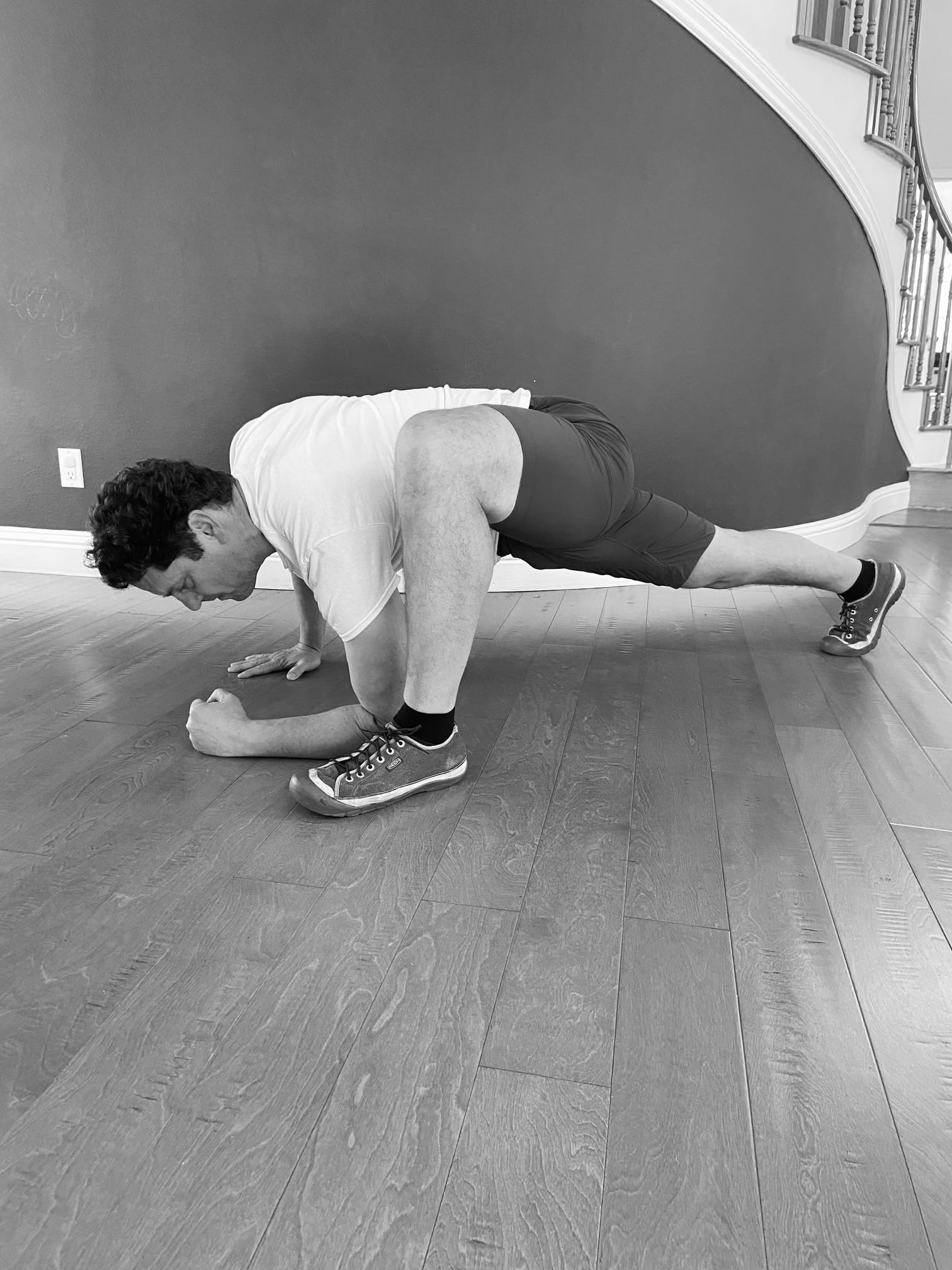
To do this movement, start in a push-up position, and then extend one leg forward with your knee bent. Lower your elbow to the inside of that knee and hold for a five count. This is movement in the sagittal plane. It's great for activating your adductors and hip flexors. It looks like this:
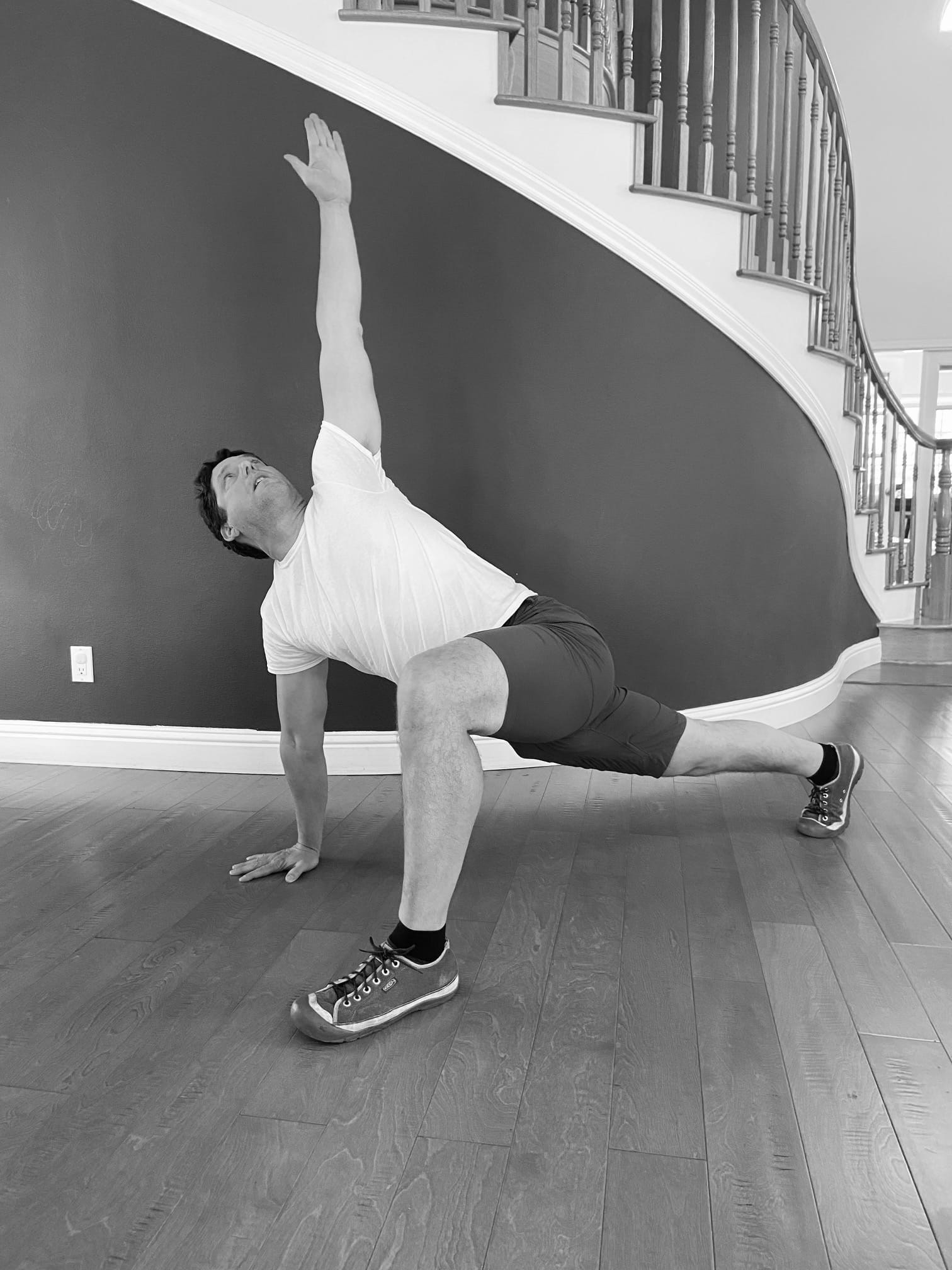
Next, maintain that pose while taking the same arm and twisting straight up. Hold for another five count. This is moving in the transverse plane, and it really focuses on the muscle groups tightened from sitting and being at a screen all day long, including the obliques and lats (located on the side of your torso), pecs (chest) and shoulder/neck/back junction (traps etc.) It looks like the picture below. Try for a set of 10 reps (elbow down and arm up) on each side.
#2 The Bridge Side Kicks.
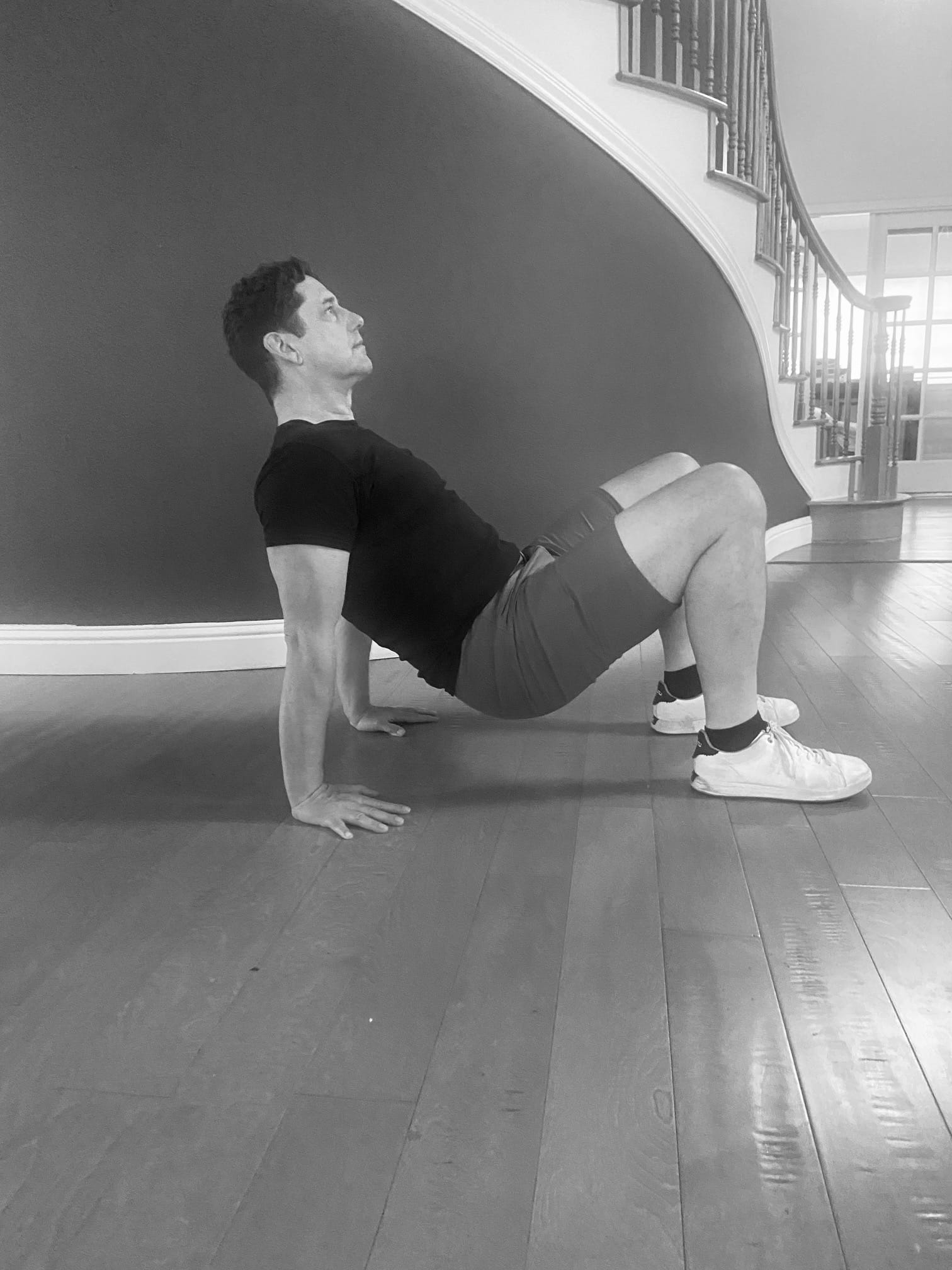
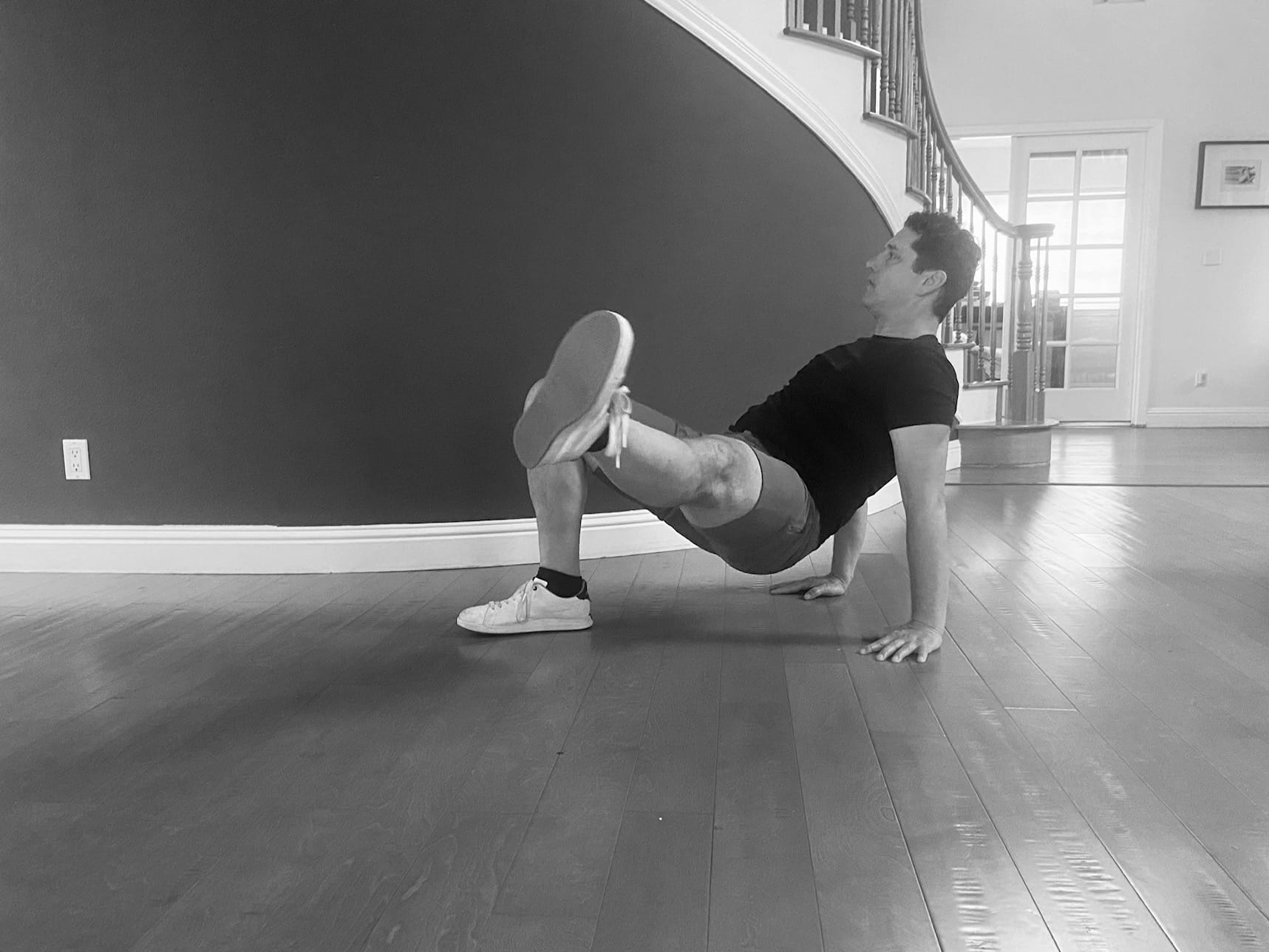
This is an updated version of an old classic. To do this exercise, sit on your butt with your knees bent and your hands positioned behind you. This is the starting position. Now, raise your butt of the ground. This is moving in the sagittal plane, and it targets the glutes, hamstrings, triceps and shoulders in particular. It looks like this:
Now, while in that pose, take out leg straight out in front of you. This activates your quads. This is another movement in the sagittal plane. Like this:
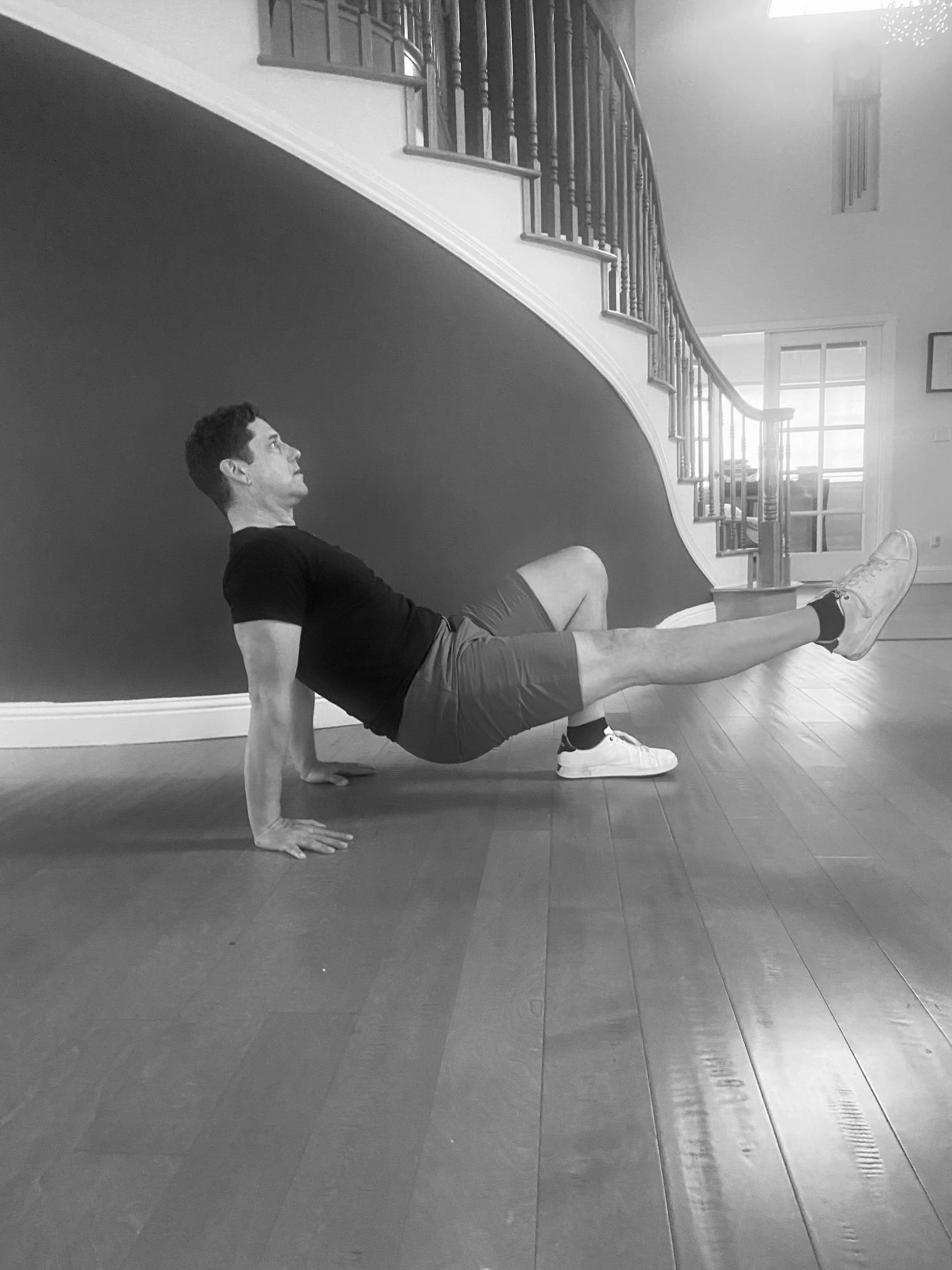
Lastly, bring that same leg out to the side while keeping your torso steady. (Below) This is moving in the frontal plane, and really gets the hip flexors and adductors involved, in addition to all the aforementioned muscles. After completing the motion, bring your butt down to the ground. Try for a set of 10 on each side.
#3 The Squat and Reach.
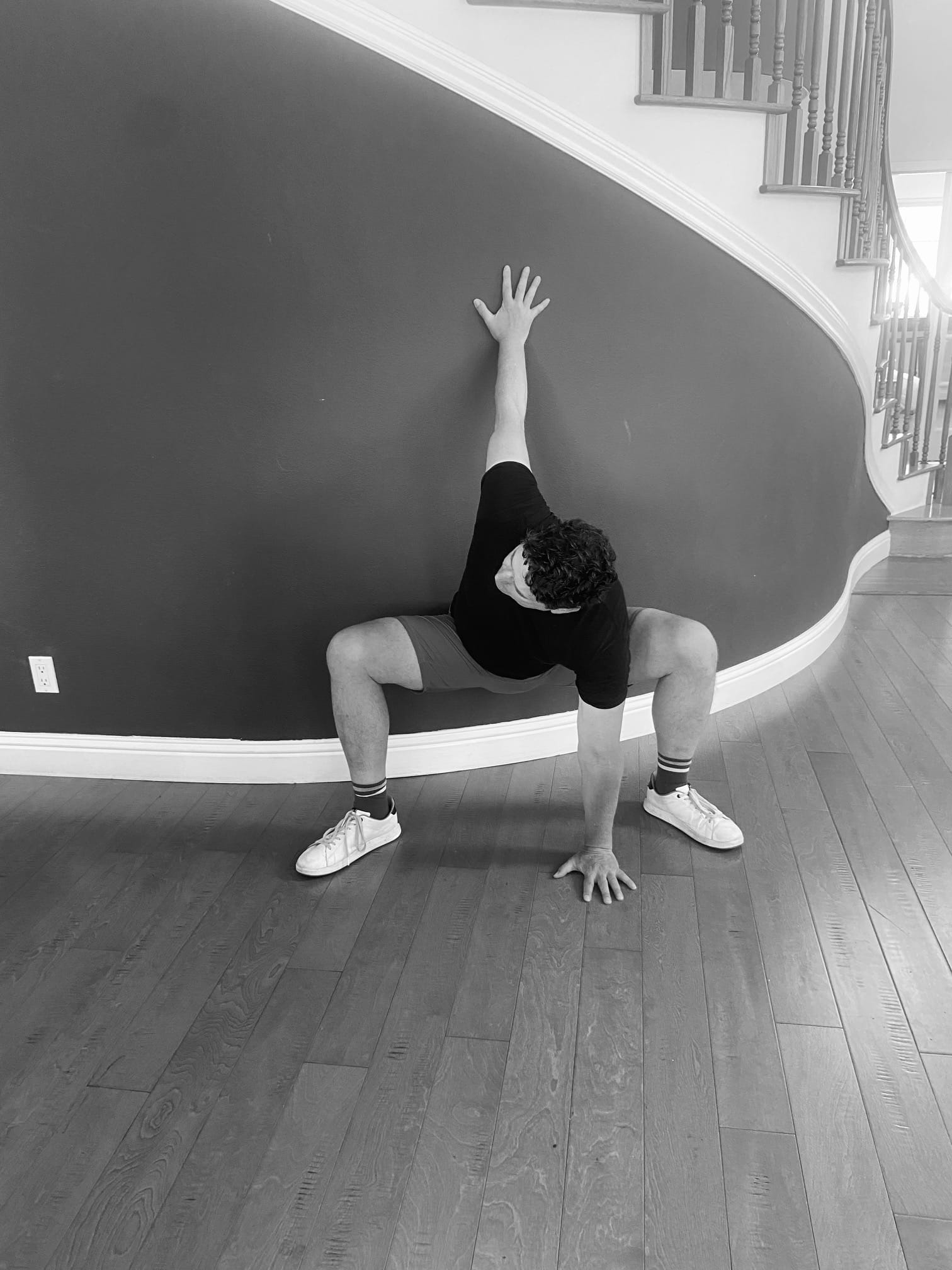
This is another one of my favorite client exercises. It really focuses on two problematic areas for people: adductor flexibility and strength and shoulder mobility. Usually, I have clients "squat and hold," but to mix a little cardio in and also to involve a different plane of motion, I'm changing it up here.
To do this movement, you'll want to position your back against a wall, and go into a squat with both palms flat on the ground. (This ensure a deep squat and really engages the adductor muscles.) While keeping one palm flat on the ground, reach around with the other arm and tap the wall behind you. This is moving in the transverse plane and focuses intently on your shoulder mobility. Try for two taps on each side, and then rise fully up and repeat. Squatting is a great exercise (the best body weight exercise along with the push-up) and is a prime example of movement in the sagittal plane. Try for a set of 20. It's demonstrated below.
Sources:
(1) Clark, M.A., Lucett, S.C., McGill, E., Montel, I., & Sutton, B. (2018) NASM Essentials of Personal Fitness Training, 6th Edition.
Joshua Brandt is an Oakland based personal trainer. He can be reached at joshua@joshuabrandtpt.com or (415) 412-7339.
If you enjoyed reading this article, please pass it along!
Member discussion