Building the Perfect Fitness Table.
How do we define "fitness?" Is it how we feel? How we look? Perhaps we can go by the guidelines of the American Heart Association, or get a definitive answer from a visiting our doctor.
Perhaps, ultimately, "fitness" is similar to how U.S. Supreme Court Justice Potter Stewart famously defined obscenity: "we'll know it when we see it."
But is that true?
Take the example of Chris Froome, one of the most decorated pro cyclists in history. He won the Tour de France four times, perhaps the most grueling competitive sports event in the world. He's pictured below with the coveted "yellow jersey" of the race leader.
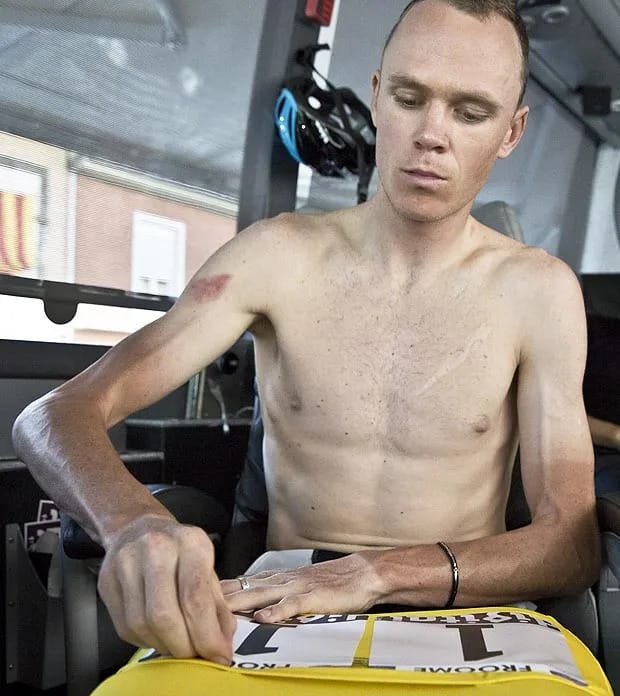
Is he fit? Well, his cardiovascular capabilities are certainly not in question. But he appears to have very little upper body muscle. Now, for all I know, Froome spends the off-season splitting wood and hauling timber. But, I kind of doubt that. Pro cyclists are notorious for wanting to cut weight at any cost; including unnecessary (read: upper body) muscle. So that leaves them equipped to cycle up hills at a very fast rate — and little else.
Muscle loss (sarcopenia) is a fact of life as we age, and mitigating that damage as we get older is imperative. So, in my book, Chris Froome doesn't count as "fit."
On the other end of the spectrum, we have the aptly named Andrew Jacked.
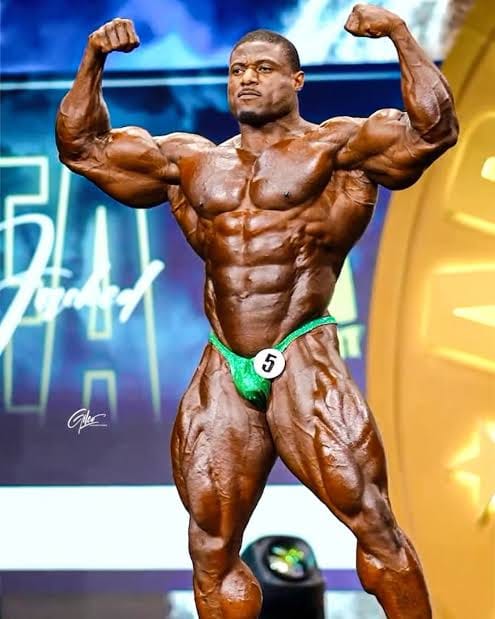
Mr. Jacked has a surfeit of muscle, as can be surmised from the pic. So, although we don't actually know how strong he is, sarcopenia doesn't appear to be a concern. But fitness is a different story. Can he run (or walk) up a large hill? Does he have any flexibility? Maybe he has a side hustle as a yoga instructor. Just as with Mr. Froome, I kind of doubt it. His physique is maximized for one thing — standing still in a string bikini. In my book, this man isn't fit.
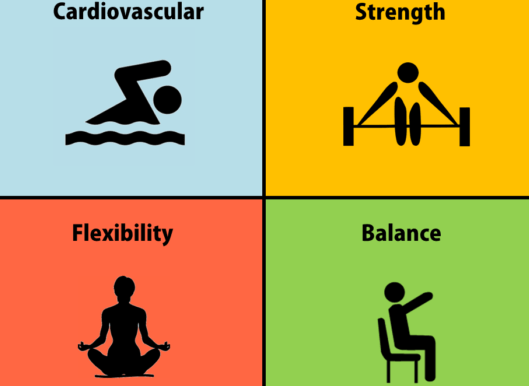
For me to call someone "fit" they need to be exhibit four qualities: cardiovascular capabilities, functional strength, flexibility, and balance. I always make the analogy of building a table. Each leg of the table needs to be solid, otherwise you have a wobbly table in danger of toppling over.
Let's take a quick look at each of the four categories, and some corresponding exercises.
Number One: Cardio
This is the facet of fitness that's hardest to qualify. What constitutes cardio? And how long should you do it for? The American Heart Association recommends a minimum of 150 minutes of moderate aerobic activity or a minimum of 75 vigorous minutes of aerobic activity per week. What does that actually look like?
Again, it's hard to tell. HIIT Training (high intensity interval training) is very popular and quite effective. But there are problems with that form of training. In a group setting, not everyone is on the same level, which can lead to injury. Secondly, it's very hard, and — unless you're hardwired for that type of activity — it makes it very difficult to sustain.
My advice is to go on a brisk walk for twenty minutes per day. If the weather isn't conducive for that, try a treadmill or exercise bike. Lastly, always try to take the stairs whenever possible. https://beneath-the-skin.ghost.io/the-perfect-exercise-snack-heres-a-hint-its-not-chewable-2/
Number Two: Strength
This is an easily misunderstood topic — in large part perpetrated by men's fitness magazines. You don't have to have bulging biceps and a chiseled chest to be strong. In fact, many of the guys I used to see regularly at the gym with a "bodybuilder's physique" lacked core strength.
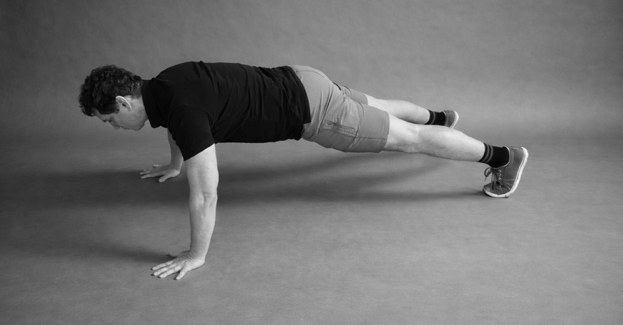
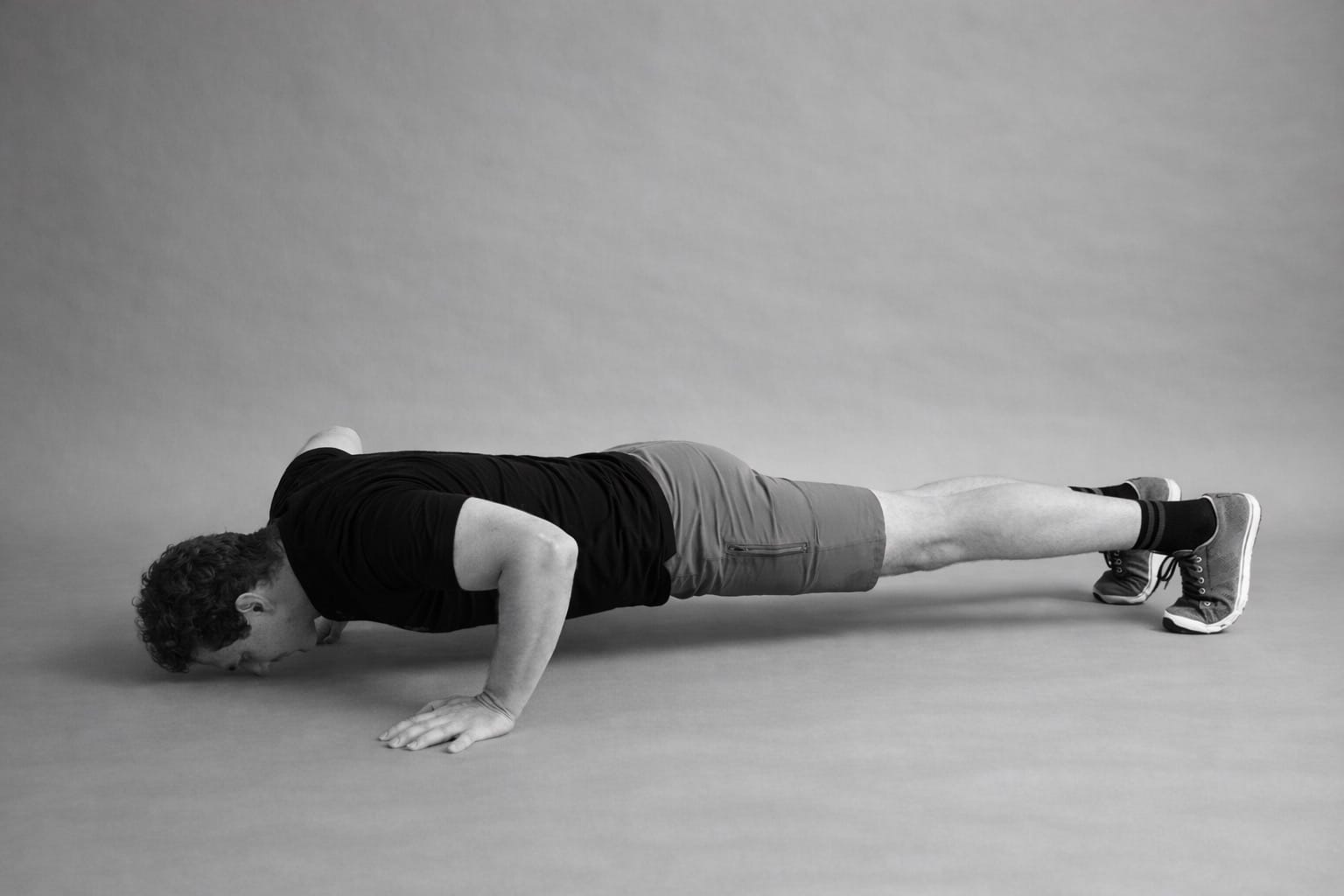
Here's a simple test: do a push-up. Now do five. And progress to ten. Along with the body weight squat, the push-up is the most fundamental movement there is. And the reason is really, really simple: if you fall, you need to pick yourself up off the ground.
To do a proper push-up, keep your hands wide (shoulder length) and focus on keeping your back aligned (not sagging) while you go down. Use your leg muscles to help you!
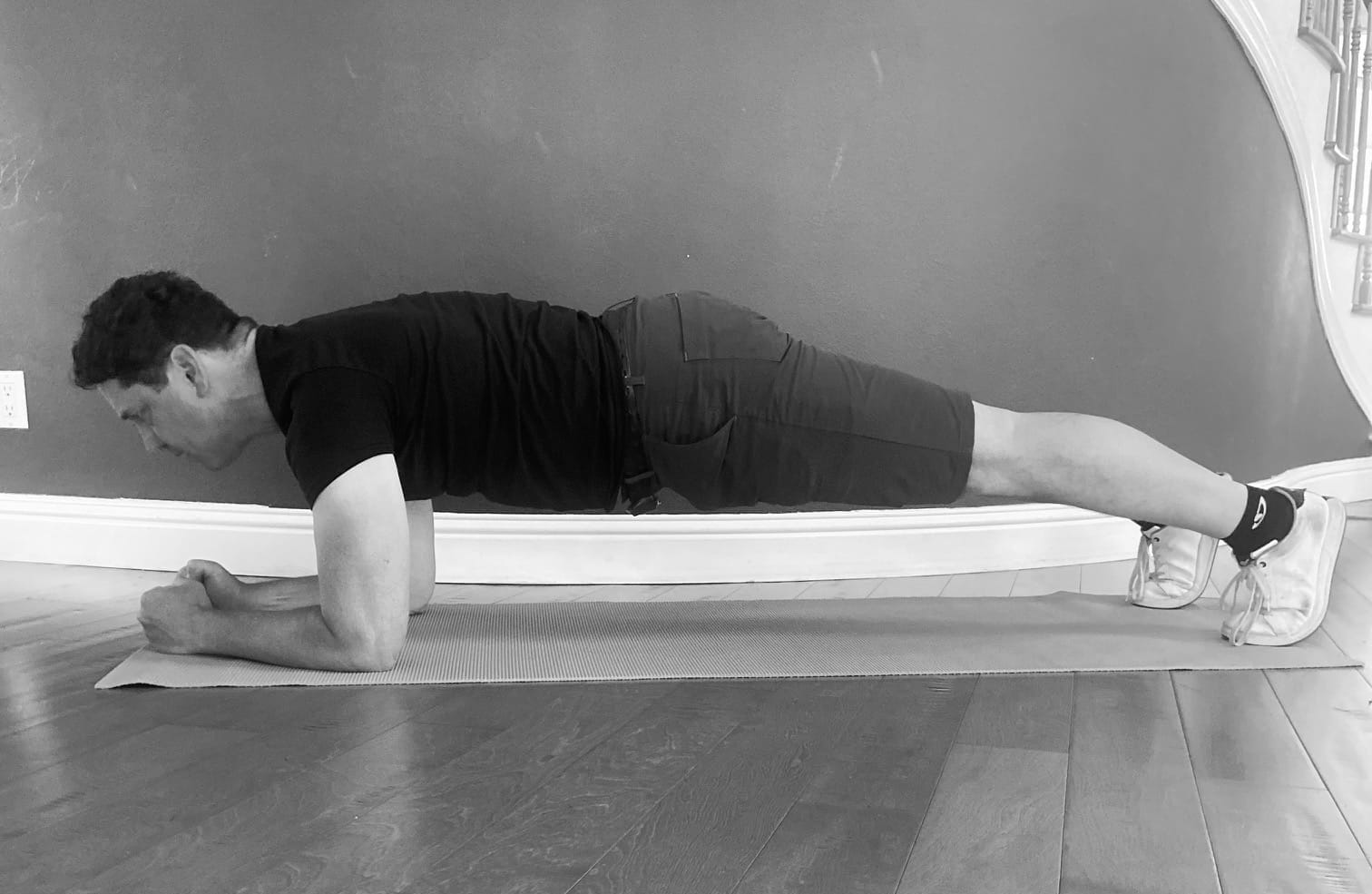
Important note: if you struggle to do a push-up, don't compromise by doing a "woman's push-up." (e.g. a push-up on your knees.) Exercises have no gender. Instead, opt to stay in the "neutral position" for twenty or thirty seconds, and progress from there. Or, try a plank on your elbows, which really targets the abs. (pictured below.)
Doing a push-up on your knees does nothing to engage your core.
Number Three: Balance
In two decades of working as a personal trainer, this is the most neglecting facet of fitness. And that's a big mistake. If push-ups help ensure that you can get yourself up off the ground if you fall, having good balance helps prevents falls in the first place.
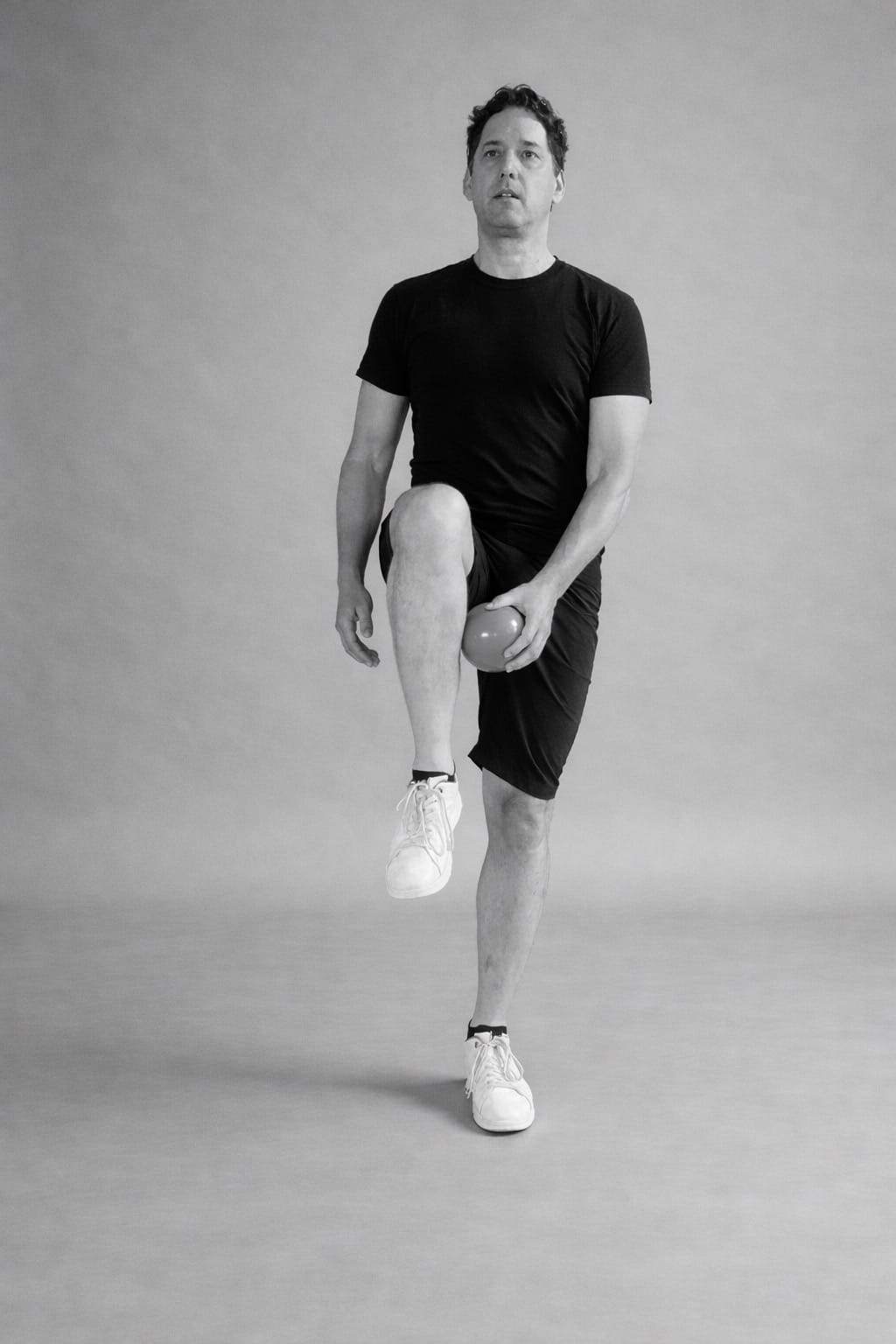
Here's a simple test. Stand upright and lift one knee to your chest. If you can keep your balance for twenty seconds — congratulations! Your balance is pretty good. If not, try a timed exercise (twenty or thirty seconds with each leg up) with your hand bracing a wall. Increase in increments of thirty seconds until you can achieve a twenty second hold without a wall.
For a more advanced exercise, try threading a small weight or ball under your leg for a ten count. Increase in increments of ten. Make sure to keep your back straight and bring your knees up. My clients do a fifty count on each leg.
Number Four: Flexibility
Flexibility often gets short shrift in people's regimens. Because people don't associate it with fat loss (cardio) or getting "jacked" (strength) many people skip stretching.
Once again, that's a mistake. Most back injuries are due to a weak core or tight muscles (particularly the hamstrings.) Or both. You'll never know how many injuries you prevented by being more flexible.
Here's my favorite "warm up" flexbility routine: the "Harris Triples." I've written about this stretch many, many times in my blog. I think it's one of the best flexibility exercises you can do. You should do them. (A complete blog post on the exercise can be found here: https://beneath-the-skin.ghost.io/why-you-should-be-doing-the-harris-triples/)
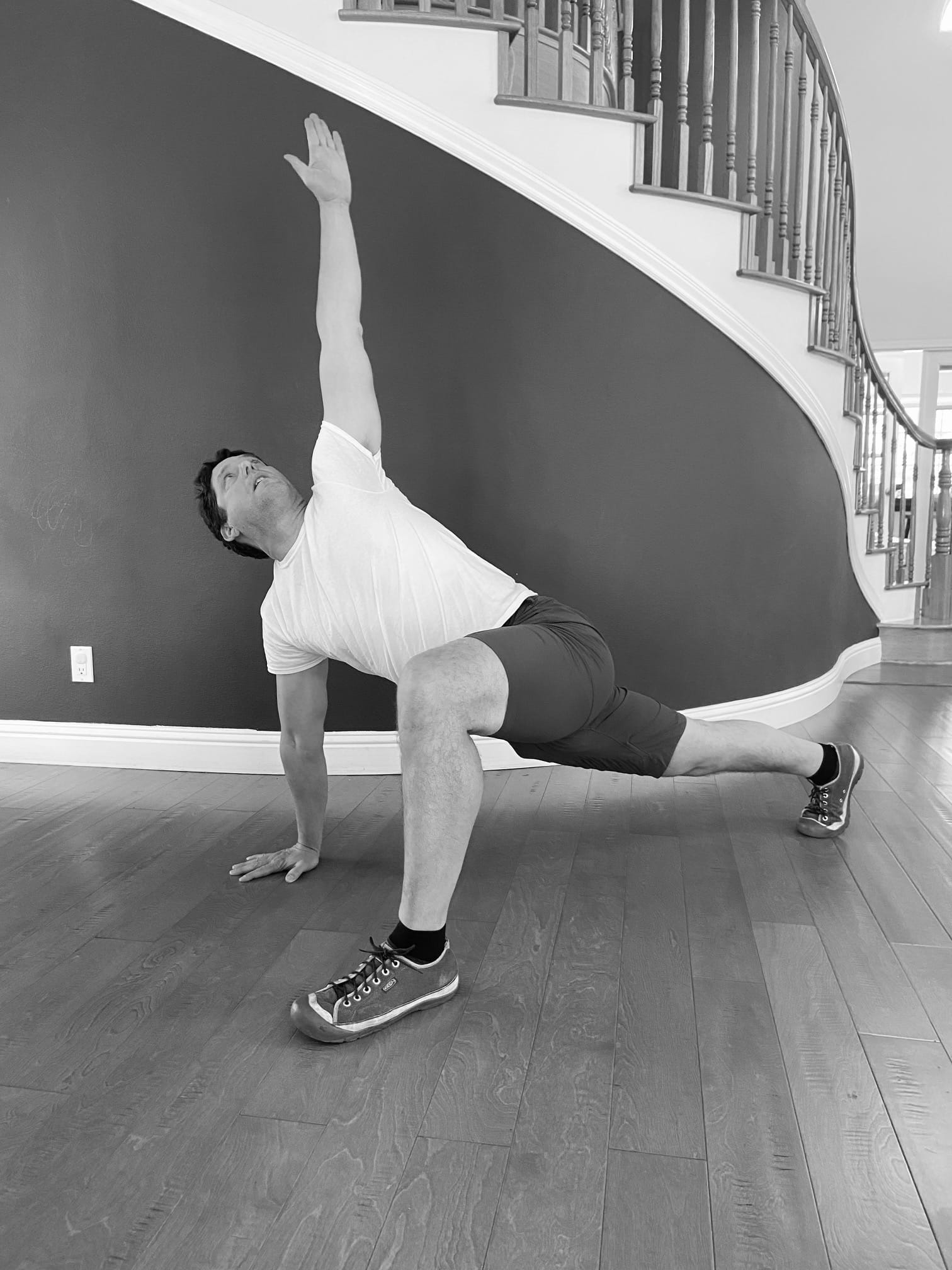
To start, get yourself in a standard push-up position, with hands shoulder length apart and feet wide. Move one foot forward and place it on the ground with your knee bent at 90 degrees. Now take the arm closest to the forward foot and bring your elbow in a bent position down to the ground on the inside of the foot. The movement looks like the picture below:
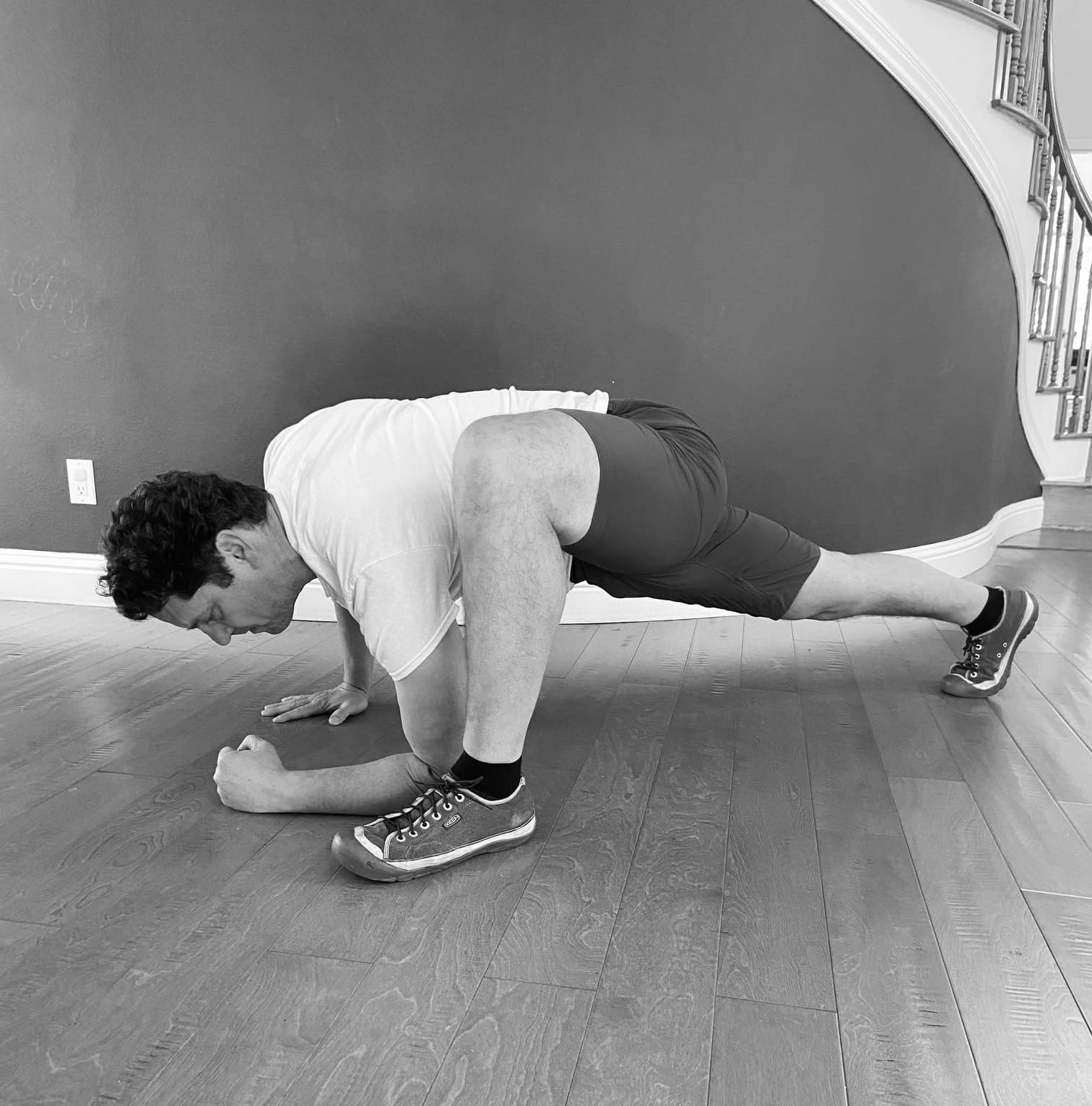
Note how my back (supporting) leg is straight. Only go as far down as your flexibility or discomfort level will allow while keeping the anchor leg straight. Hold for a five second count. This movement works muscle groups including the ab complex and the adductors (the groin muscles).
The next step is to raise the arm that was bent toward your knee and raise it straight into the air while trying to keep both arms aligned with each other. (Pictured below) Aim for a five second hold again. Repeat both movements on each side. Now, you're incorporating more of the ab complex, in addition to the lats and serrati (side muscles) and the deltoids (shoulder complex).
So, there you have it.... the four crucial components of fitness. Some of them aren't as glamorous as people would like. Maybe all of them, in fact. But, until such time as modern medicine invents a pill to give us cardiovascular endurance, strength, balance, and flexibility, these four elements are crucial for living a long and healthy life.
Joshua Brandt is an Oakland based personal trainer. He can be reached at joshua@joshuabrandtpt.com or (415) 412-7339.
If you enjoyed reading this article, please pass it along!
Member discussion